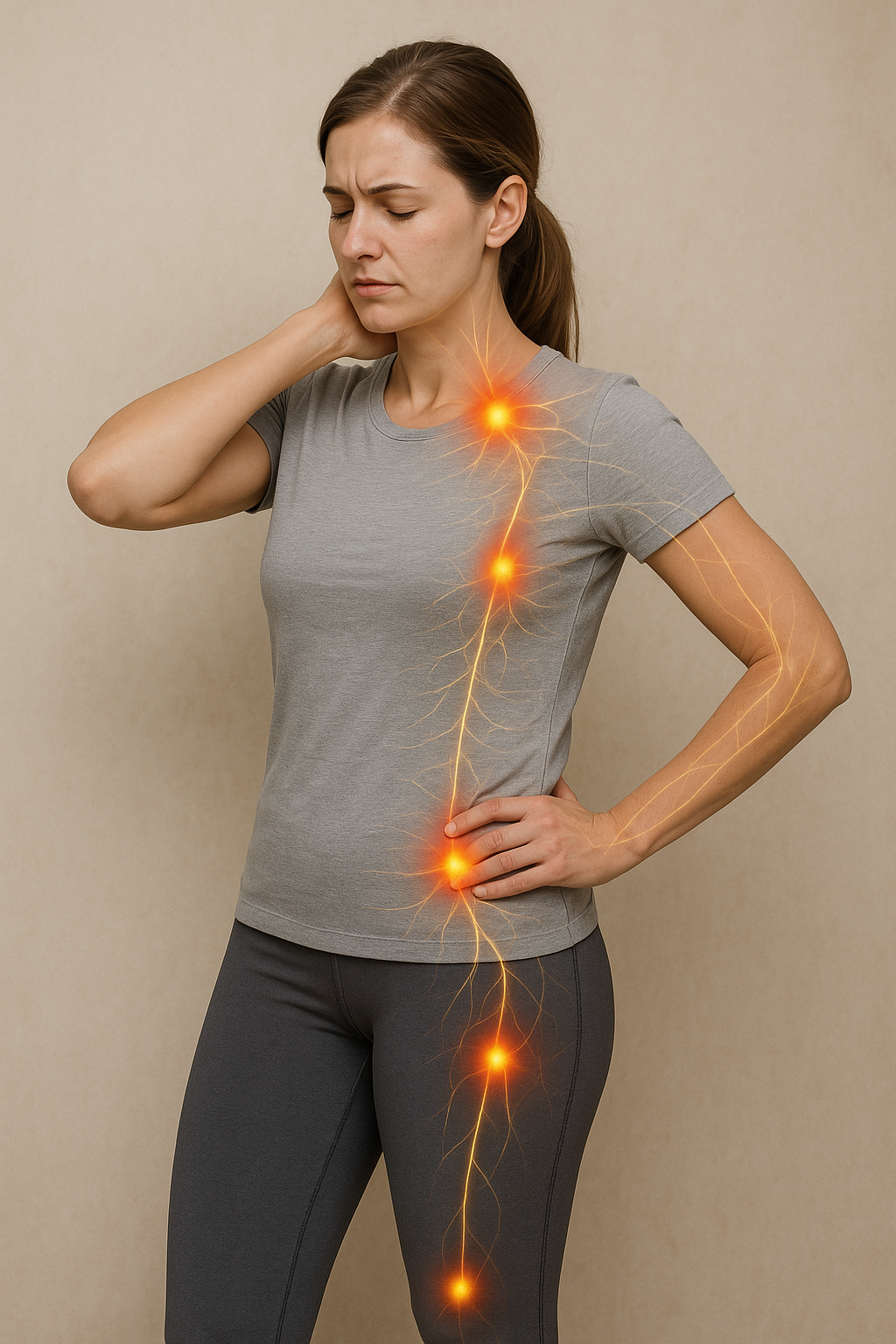

Hip pain is one of the most common complaints people bring to massage therapy. While arthritis, sports injuries, or sitting too long can certainly play a role, the hip is deeply connected to the rest of the body. Often, hip pain is less about the joint itself and more about the surrounding tissues and movement patterns that feed into it.
Because the hip is a central hub — linking the spine, pelvis, and legs — even small restrictions in other areas can create big problems here. The good news? Massage therapy excels at addressing these hidden contributors. By working beyond the obvious pain site, we can restore balance, ease tension, and help the hips move the way they were designed to.
Here are some of the most surprising sources of hip pain — and how massage therapy helps.
1. Low Back Restrictions
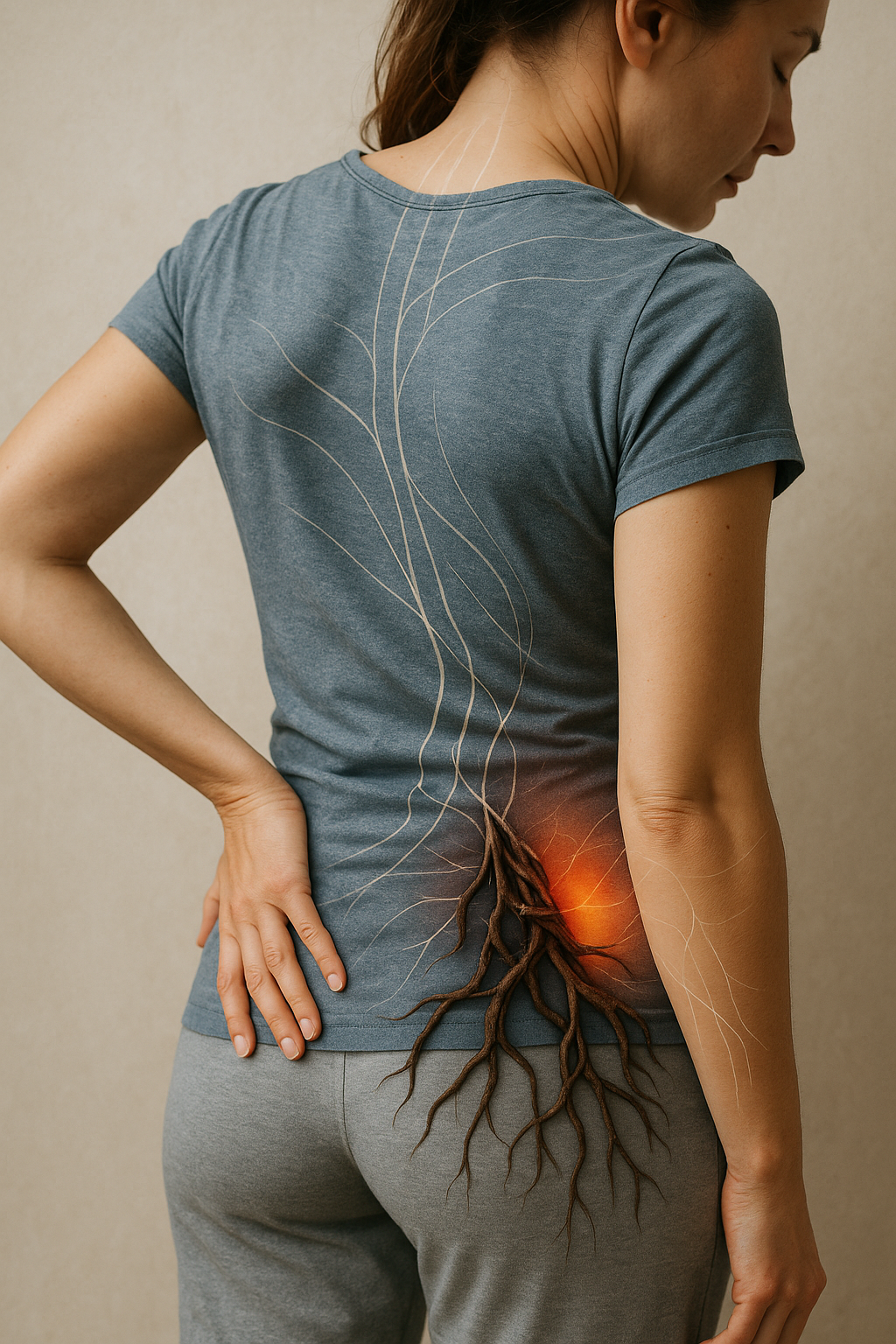
The muscles of the lumbar spine (like the quadratus lumborum, erector spinae, and deep multifidi) anchor directly into the pelvis. When these tissues are tight or shortened, they can tilt the pelvis forward or backward, creating compression in the hip joints.
Clients often describe a “pinching” in the front of the hip or stiffness when standing after sitting. What’s really happening is that the hips are stuck compensating for a back that won’t move freely.
Massage therapy helps by softening those low back restrictions, restoring mobility to the pelvis, and reducing the constant compressive load on the hips. When the back moves better, the hips usually follow.
🔗 Related: Low Back Pain – Surprising Sources, Neck Pain – Surprising Sources
2. Abdominal & C-Section Scars
Many people don’t realize how much abdominal surgery can affect the hips. C-section scars, hernia repairs, or even laparoscopic incisions create adhesions in the fascial network of the abdomen and pelvis.
These adhesions act like little “tethers,” pulling on the pelvis from the front and restricting natural hip rotation. Women who’ve had C-sections sometimes report hip tightness years later, never connecting it back to their birth experience.
Gentle scar tissue release and abdominal massage can restore mobility through these layers. Clients often notice not only freer hips, but also improved digestion, posture, and even breathing.
🔗 Related: Scar Tissue & Massage Therapy, Shoulder Pain – Surprising Sources
3. Glute Imbalances
Your glutes are the powerhouse of your hips. But when they don’t fire evenly, problems arise.
- Glute max provides power for standing and climbing.
- Glute medius and minimus stabilize the pelvis with every step.
When one side becomes tight and overactive while the other is weak or inhibited, the hips compensate unevenly. This imbalance often shows up as pain deep in the hip socket, outer hip aching, or a sense of “instability” during walking.
Massage therapy helps by releasing the overactive side and stimulating the underactive one, restoring balance across the pelvis. Paired with targeted strengthening, this can completely change the way the hips bear load.
🔗 Related: Knee Pain – Surprising Sources, Foot Pain – Surprising Sources
4. Restricted Calves & Hamstrings
It may surprise you, but tight calves and hamstrings can absolutely drive hip pain. Why? Because they’re part of the body’s posterior chain — a continuous line of fascia and muscle running from the soles of your feet up into your pelvis.
When the calves and hamstrings are short, they tug on the pelvis and lock it into a posterior tilt. This misalignment stresses the hip joints and limits mobility. Runners, cyclists, and desk workers often fall into this trap.
Massage therapy lengthens these tissues, restoring balance through the chain. Clients frequently notice that when their legs move more freely, the hips suddenly feel “lighter” and less compressed.
🔗 Related: Foot Pain – Surprising Sources, Low Back Pain – Surprising Sources
5. Jaw & Neck Tension
Yes — even the jaw.
The body’s fascial system is a continuous web, and one of its most fascinating connections is the deep front line: a fascial chain running from the jaw, down through the spine, and into the pelvis.
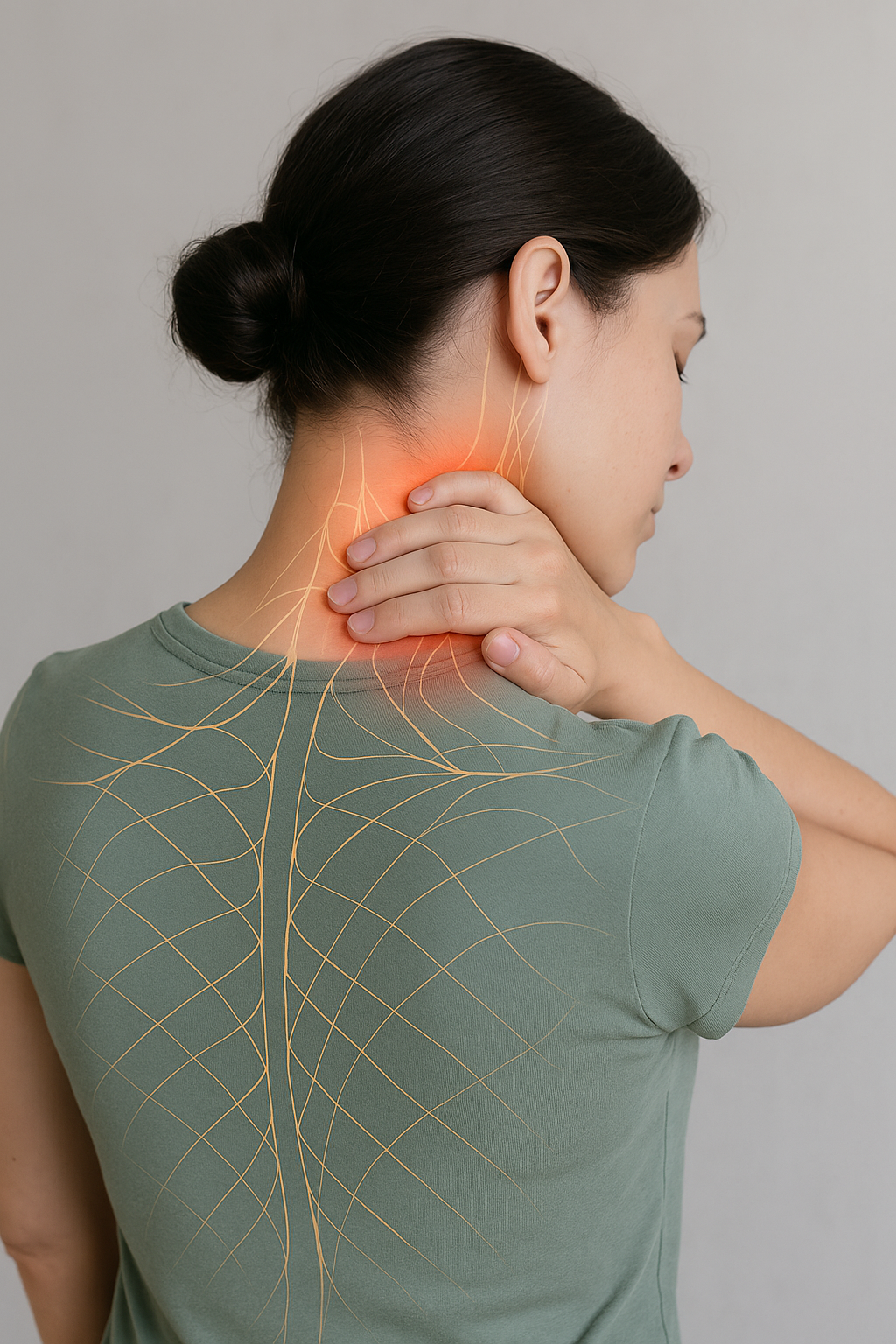
Chronic jaw clenching (TMJ) or neck tension can ripple downward, subtly twisting or bracing the pelvis. Clients with both jaw tension and hip issues often notice that releasing one improves the other.
Massage therapy helps by addressing not only the hips, but also these upstream restrictions. Sometimes, working on the jaw or neck is the missing link in long-standing hip pain.
🔗 Related: Neck Pain – Surprising Sources, TMJ & Massage Therapy
6. Hip Pain & Scoliosis
Scoliosis directly affects pelvic alignment. One hip may hike higher, rotate forward, or bear more weight than the other. Over time, this uneven loading creates chronic stress on the hip joints, mimicking bursitis, labral irritation, or “tight hips.”
Massage therapy can’t change the curvature itself, but it can soften the fascial bracing that scoliosis builds up around the hips. By easing asymmetrical pulls through the psoas, glutes, and obliques, massage restores a greater sense of balance and mobility.
Clients with scoliosis often describe the results as “walking straighter” or feeling like their hips finally “unclench.”
🔗 Related: Scoliosis & Massage Therapy, Shoulder Pain – Surprising Sources
The Takeaway
Hip pain isn’t just a “hip problem.” It often reflects imbalances in the low back, abdomen, legs, and even the jaw. By addressing the body as a whole, massage therapy restores balance, movement, and lasting relief to the hips.
If your hips feel tight, achy, or unstable — don’t assume the joint is the whole story. The key may lie in releasing hidden restrictions elsewhere.
At-Home Tips for Happier Hips
Massage is powerful, but daily care reinforces progress. Here are simple ways to support pain-free hips at home:
- 90/90 Hip Opener: Sit with one leg bent in front at 90° and the other behind you at 90°. Lean forward gently over the front shin. Opens hip rotators and eases deep socket tension.
- Bridge Lift: Lie on your back, knees bent, feet hip-width apart. Press through the heels to lift the hips, then slowly lower. Strengthens glutes and balances pelvic stability.
- Hamstring Stretch: Place one heel on a chair, hinge forward at the hips, and stretch. Keeps the posterior chain from pulling on the pelvis.
- Jaw Relaxation Drill: Place the tip of your tongue on the roof of your mouth, then slowly open and close your jaw while breathing deeply. Calms fascial tension that travels into the pelvis.
- Pelvic Tilt Reset: Lie on your back, knees bent. Gently rock the pelvis forward and backward to mobilize the low back–hip connection.
Ready to Move Freely Again?
If your hips have been nagging for weeks, months, or even years, it may be time to look beyond the joint itself. At Rise Massage Therapy, we specialize in uncovering the hidden contributors to pain and restoring whole-body balance.
👉 Book your hip-focused session today and discover how freeing the rest of your body can transform the way your hips feel.