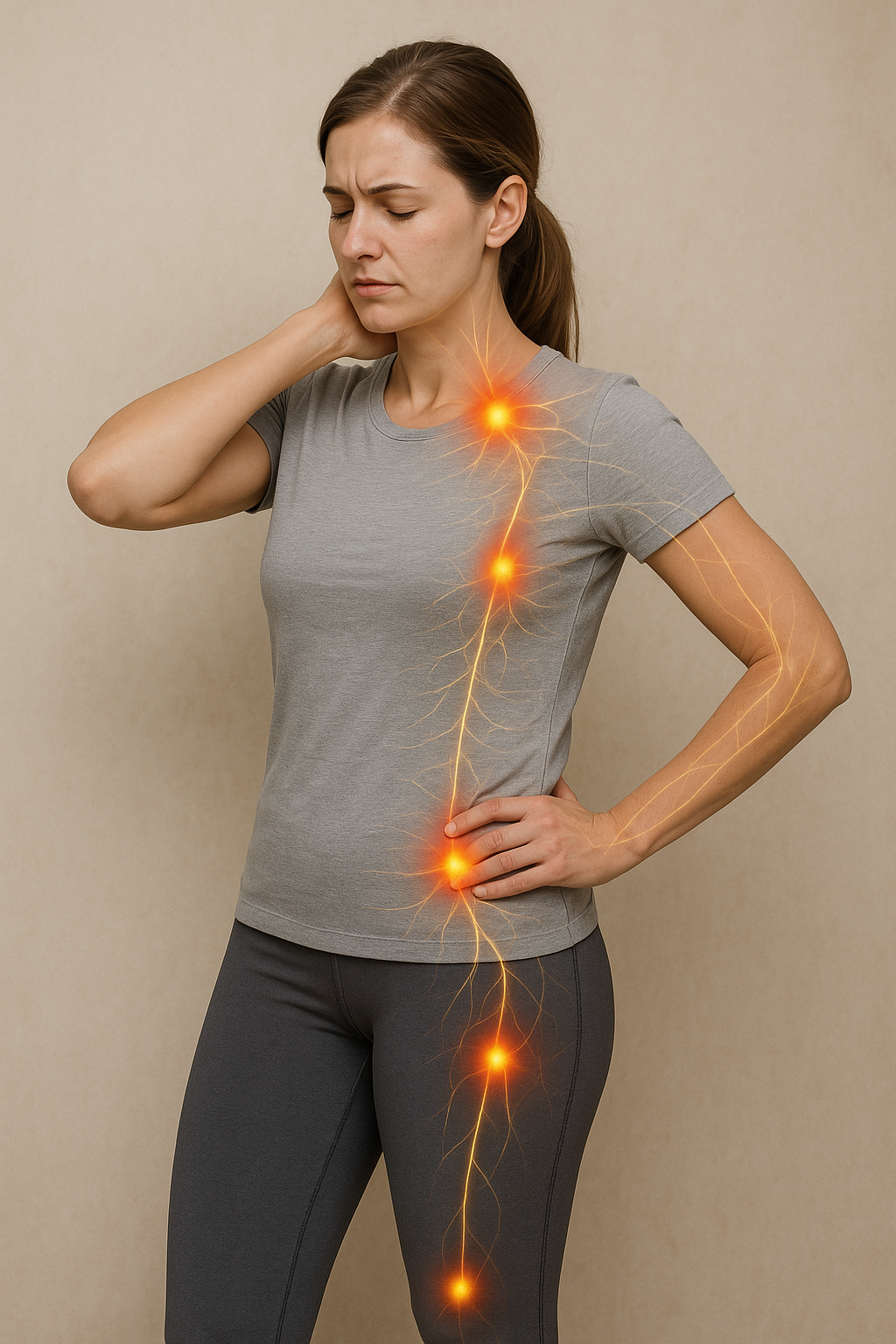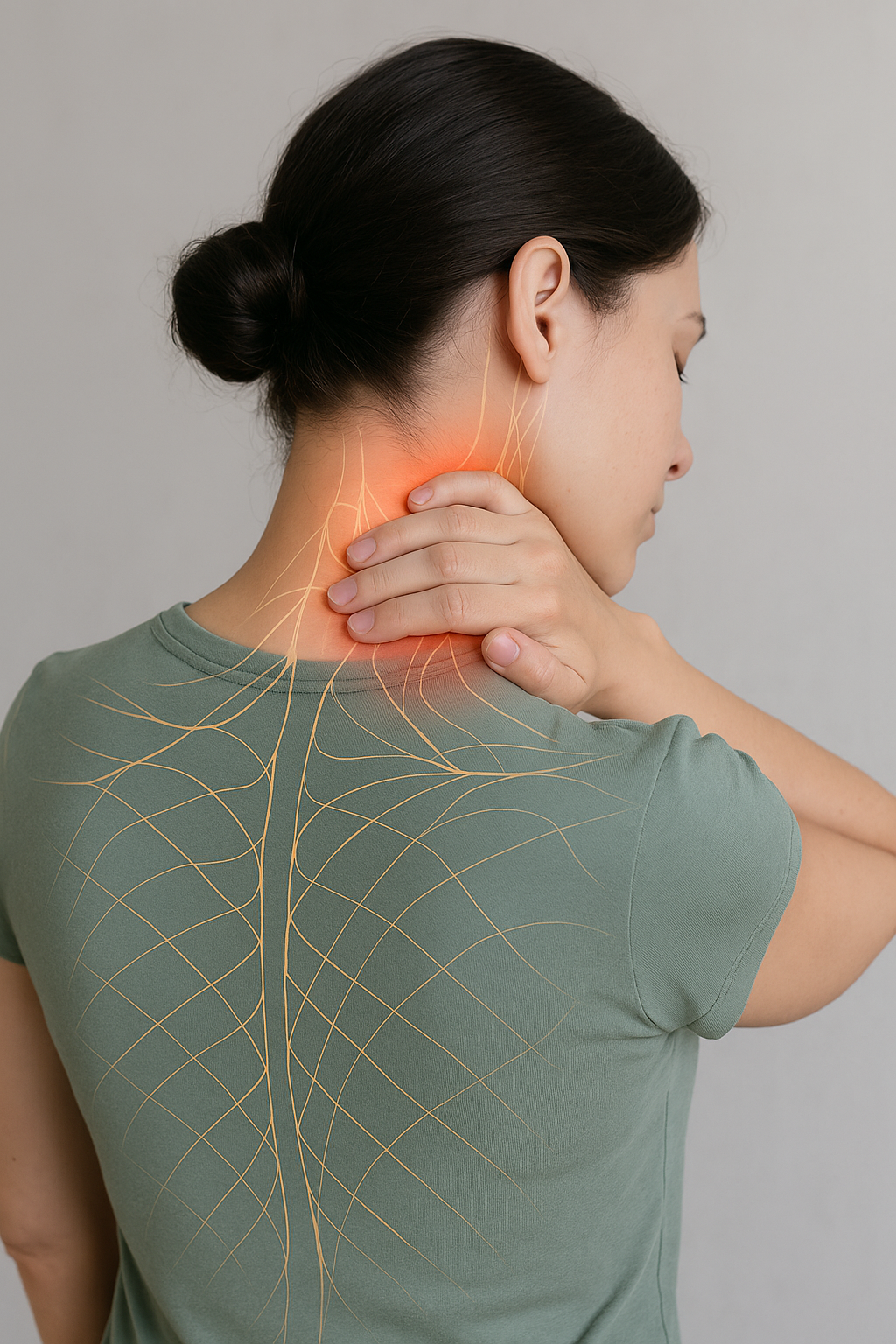


Shoulder pain happens to almost all of us — but here’s the twist: the shoulder itself isn’t always to blame.
Because it sits at the intersection of the neck, chest, spine, and arm, the shoulder is highly influenced by surrounding regions. Restrictions elsewhere often funnel tension into the joint until it finally cries out in pain. At Rise Massage Therapy, we call this the Pain Chain — the way tightness or old injuries in one part of the body silently overload another.
Below are some of the most surprising contributors to shoulder pain — and how massage therapy helps restore balance.
1. Tight Chest & Pectoral Muscles
When the pectoral muscles (especially pectoralis major and minor) tighten, they pull the shoulders forward into a rounded posture. This posture overloads the rotator cuff and upper back muscles, forcing them to work overtime just to keep the arms lifted.
Clients often assume their shoulder pain means “something is wrong in the joint,” but in reality, the problem starts at the chest. Desk jobs, driving, and hours of scrolling or typing all reinforce the same pattern. Over time, the shoulders begin to feel locked, achy, or fatigued.
Massage therapy lengthens shortened pectoral tissues and restores fascial balance across the chest. By releasing the front of the body, posture naturally improves — the shoulders roll back, the chest opens, and strain across the joint decreases. Many clients notice that shoulder discomfort eases almost immediately once the pectorals are released.
🔗 Related: [Neck Pain – Surprising Sources], [Desk Worker Self-Care Tips]
2. Neck Restrictions
The neck and shoulder are deeply interconnected. Muscles like the levator scapulae attach directly from the cervical spine into the shoulder blade, while the scalenes influence both posture and nerve pathways that run into the arm.
When these tissues are tight, clients may notice not just shoulder pain but also headaches, limited range of motion, or even tingling down the arm. The body interprets this as “shoulder trouble,” but the real driver is in the neck.
Massage therapy targets these deeper cervical structures, improving circulation and restoring proper glide in the fascia. Once the neck is released, the shoulder often moves more freely — without the pulling or radiating pain that kept it stuck.
🔗 Related: [Neck Pain – Surprising Sources]
3. Hand & Wrist Limitations
It might sound strange, but restrictions in the hands and wrists can directly contribute to shoulder pain. Think about how often you type, swipe, or grip throughout the day — the repetitive strain tightens the small muscles of the hand, wrist, and forearm.
Because fascia is continuous, tension in the hands travels up the arm, pulling on the elbow, forearm, and eventually the shoulder. This creates a low-grade tug on the pectoral girdle every time you move your arm.
Massage therapy helps by releasing the thenar and hypothenar muscles of the hand, freeing the forearm fascia, and restoring healthy movement patterns. Many clients are shocked to discover that when their forearms and wrists loosen, their shoulders instantly feel lighter and less burdened.
🔗 Related: [Elbow & Wrist Pain – Surprising Sources], [Neck Pain – Surprising Sources]
4. Thoracic Spine & Rib Restrictions
The shoulder blade (scapula) doesn’t exist in isolation — it glides along the ribcage with every movement. If the thoracic spine is stiff or ribs lose their natural mobility, the scapula can no longer move properly. This forces the rotator cuff and shoulder joint to compensate, often leading to pain and irritation.
This pattern is especially common in people who sit for long periods, drive frequently, or do activities that round the spine forward. Limited thoracic extension means the shoulder has to “work harder” than it should.
Massage therapy and myofascial release through the mid-back restore rib mobility, improve posture, and re-establish a healthy foundation for the shoulder to move freely. Clients often notice improved overhead reach or lifting capacity almost immediately.
🔗 Related: [Low Back Pain – Surprising Sources], [Hip Pain – Surprising Sources]
5. Old Injuries & Scar Tissue
One of the most overlooked contributors to shoulder pain is scar tissue, even from surgeries or injuries far from the shoulder itself. Because fascia is a continuous web, a scar on the abdomen, chest, or even hip can create subtle pulls that ripple up the chain.
For example, a client with a C-section scar may unconsciously carry forward tension in the abdominal fascia that changes rib movement and shoulder mechanics. Similarly, an old gallbladder or appendectomy scar can cause adhesions that restrict torso rotation, indirectly loading the shoulder.
Massage therapy helps by softening and remodeling scar tissue, restoring glide across fascial planes. Even decades-old scars can become more mobile, relieving hidden restrictions that quietly contribute to shoulder pain.
🔗 Related: [Scar Tissue & Massage Therapy]
6. Shoulder Pain & Scoliosis
When the spine curves, the ribcage often rotates along with it. This changes how the shoulder blades rest and glide across the ribs, leaving one shoulder higher, tighter, or more restricted. Over time, this imbalance strains the rotator cuff, traps, and pecs — even if the shoulder itself is “healthy.”
Massage therapy helps by releasing the fascial pulls across the ribcage, pecs, and back, giving the shoulder blades a more even base of support and reducing asymmetrical stress.
At-Home Tips for Supporting Your Shoulders
Massage therapy addresses the root causes, but daily habits reinforce progress. Here are a few simple practices you can use to support pain-free shoulders:
- Doorway Chest Stretch: Stand in a doorway with elbows bent at 90°, hands on the frame. Step forward gently to stretch the pectorals. Hold 20–30 seconds, repeat 2–3 times daily.
- Neck Side Stretch: Sit tall, drop one ear toward your shoulder, and hold for 20–30 seconds. Loosens scalenes and levator scapulae.
- Wrist Flexor Reset: Extend one arm forward, palm up. Use the other hand to gently pull fingers back. Relieves forearm tension that travels up to the shoulder.
- Thoracic Extension Drill: Sit tall, interlace fingers behind your head, and gently lean back over a chair. Mobilizes the mid-back and ribcage.
- Breathing Reset: Place hands on lower ribs, take slow breaths expanding side-to-side. Improves rib mobility and reduces bracing.
These quick resets are especially helpful if you sit for long hours or spend time at a computer.
The Takeaway
Shoulder pain rarely exists in isolation. Because the joint is part of a larger pain chain, the solution is often found by treating the chest, neck, spine, hands, and even old scar tissue. Massage therapy works through these layers, creating posture improvements, freer movement, and long-lasting relief.
If your shoulders are giving you trouble, the real solution may lie beyond the joint itself.
👉 Ready to address your shoulder pain? [Book your session at Rise Massage Therapy in Winchester]