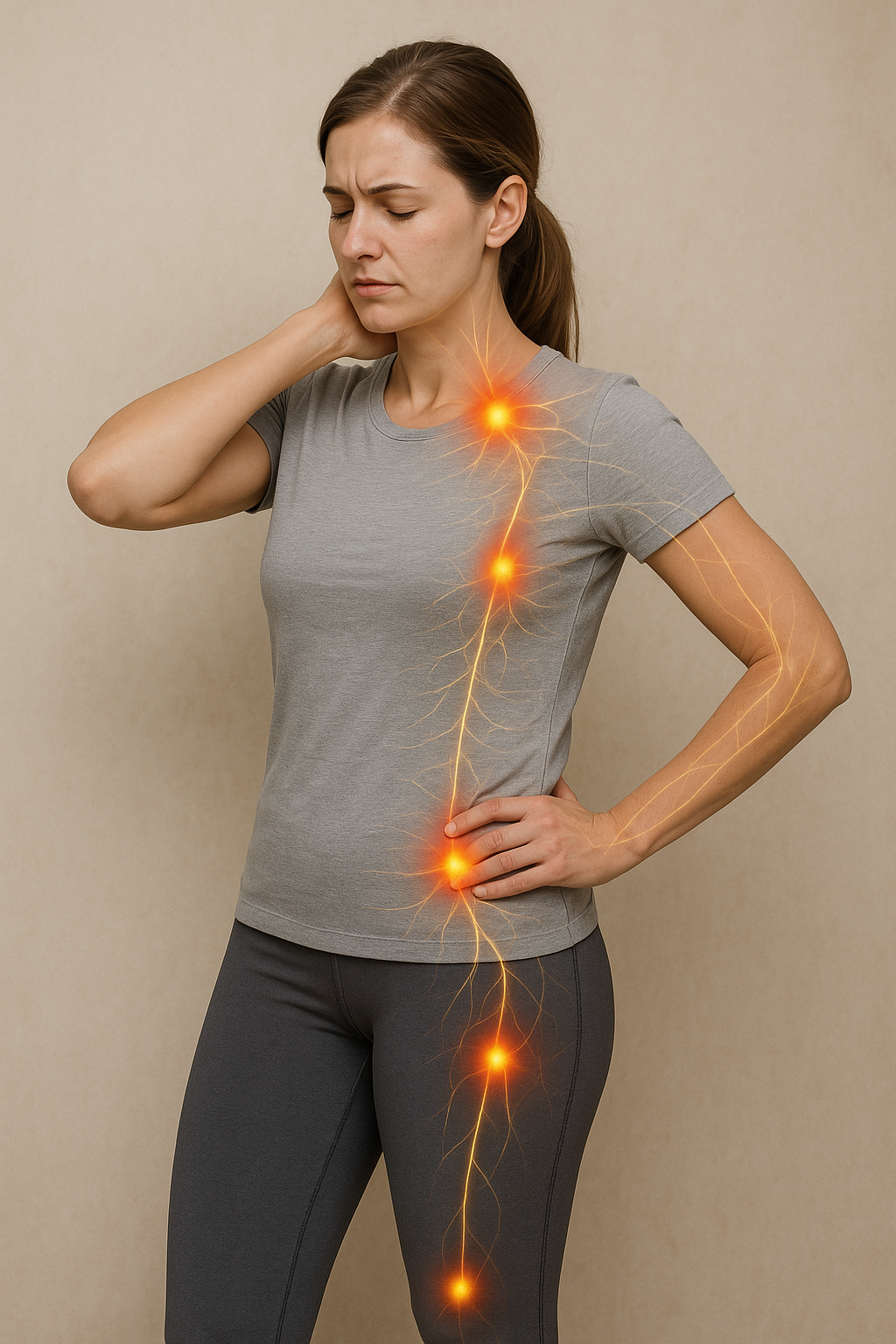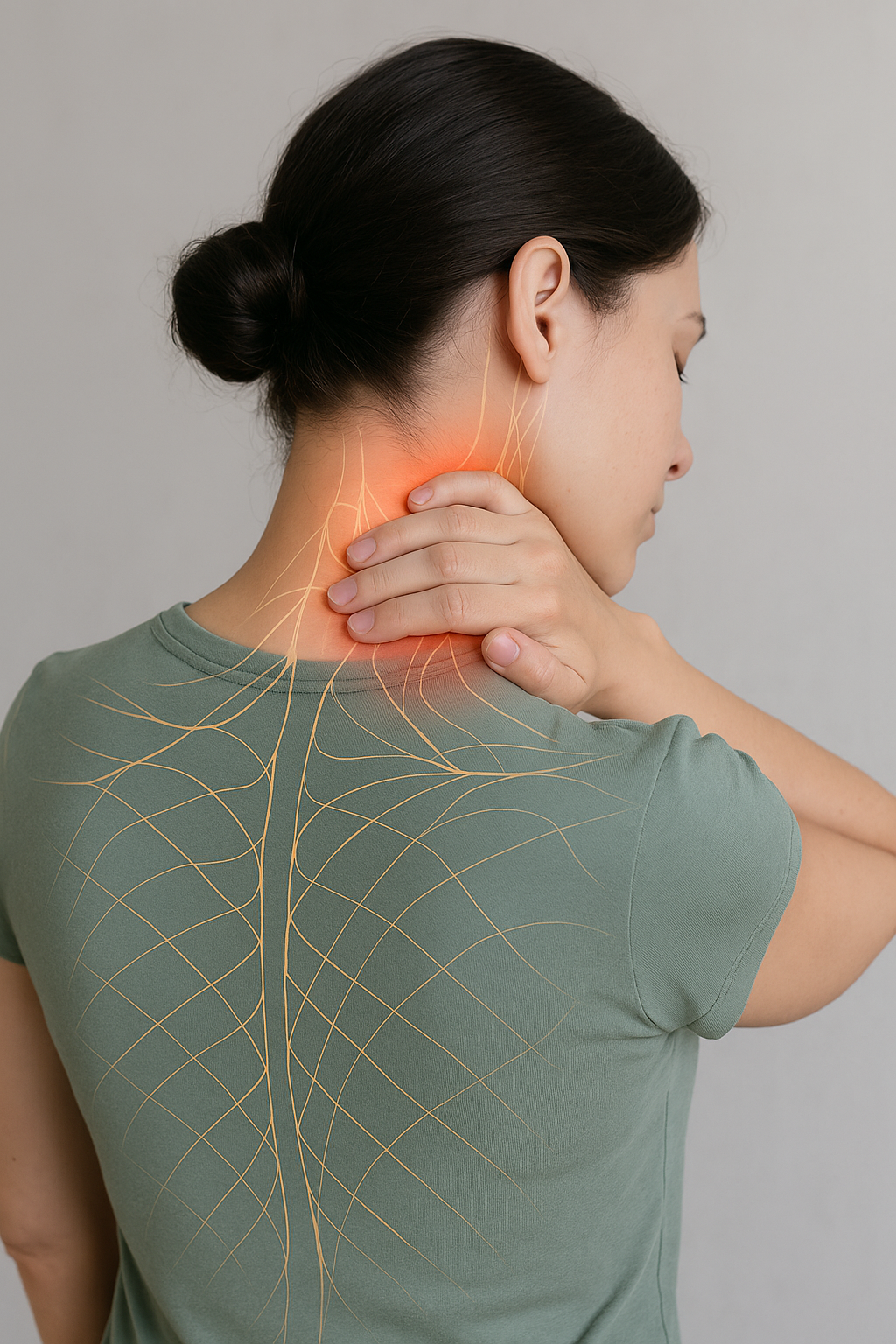

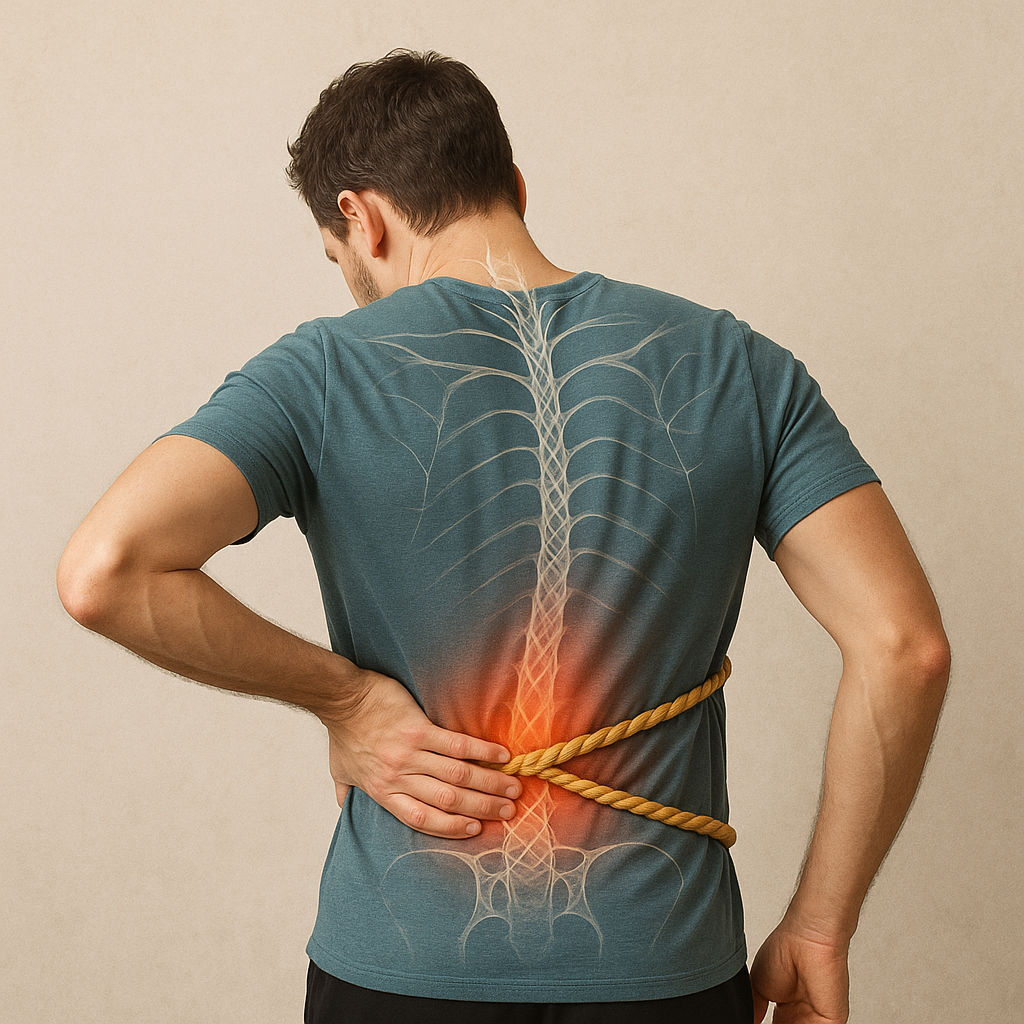
Low back pain is one of the most common reasons people seek massage therapy. In fact, it’s one of the leading causes of missed work worldwide. But here’s the twist: the pain you feel in your lumbar spine is often just the symptom, not the source.
At Rise Massage Therapy, we call this the Pain Chain — the way restrictions in one part of the body silently load stress into another. Your low back might be the loudest voice in the chain, but the real culprits are often hiding elsewhere.
Below are some of the most overlooked — yet surprisingly common — contributors to low back pain, and how massage therapy helps uncover and resolve them.
1. Hip Flexors & Pelvic Imbalance
If you spend most of your day sitting, chances are your hip flexors (especially the psoas) are tight. These muscles shorten over time, tugging the pelvis into an anterior tilt — a subtle forward rotation. That tilt transfers constant strain into the lumbar vertebrae and surrounding fascia.
Massage therapy — especially myofascial release, deep tissue, and hip-opening stretches — can restore hip flexor length, rebalance the pelvis, and give the low back space to relax.
🔗 Related blog: [Hip Pain: Surprising Sources You Might Be Missing]
2. Tight Hamstrings & Calves
The posterior chain runs from your heels all the way up into your head, and when hamstrings and calves tighten, it’s like pulling on the bottom of that chain. The low back ends up doing extra work just to keep you upright, especially during walking, bending, or even standing still, leading to low back pain.
Clients are often amazed when releasing restrictions in the legs immediately improves low back flexibility — sometimes more than directly working on the back itself.
🔗 Related blogs: [Foot Pain: Surprising Sources You Might Be Missing], [Knee Pain: Surprising Sources You Might Be Missing]
3. Abdominal Scar Tissue
Surgical scars — from C-sections, hernia repairs, or abdominal surgeries — don’t just live on the surface. They create adhesions deep in the fascia, which is continuous throughout the body. When that fascial “web” loses glide, it often transfers into the low back, forcing the spine to absorb stress that should be distributed elsewhere.
Even decades after surgery, gentle scar tissue work can free up these restrictions and restore healthy movement patterns. Many clients report unexpected relief when we treat scars that seemed unrelated to their back pain.
🔗 Related blogs: [Scar Tissue Isn’t Just Skin Deep], [Hip Pain: Surprising Sources You Might Be Missing]
4. Feet & Ankles
Think of your feet as the foundation of a house. If they collapse (flat feet), overcompensate (high arches), or carry old injuries, everything above — including your low back — has to adapt. With every step, your pelvis and lumbar spine absorb the imbalance.
Massage therapy targeting the fascia of the feet, ankles, and calves can help reset this foundation, correcting mechanics higher up the chain. A stable base allows the spine to function without overwork.
🔗 Related blog: [Foot Pain: Surprising Sources You Might Be Missing]
5. Stress & Protective Bracing
Not all back pain is physical. The nervous system plays a major role. Stress, trauma, or emotional overload can cause the body to “brace” itself, tightening the diaphragm, abdominals, and lumbar fascia as if preparing for impact. Over time, this protective tension becomes its own form of chronic pain.
Massage therapy doesn’t just work on muscles — it calms the nervous system, restores parasympathetic balance, and helps dissolve protective holding patterns. For many, this combination of physical and emotional relief is what makes the biggest difference.
At-Home Tips for Supporting Your Low Back
Massage therapy can jumpstart your healing, but small daily habits make the relief last longer. Here are a few easy ways to support your low back between sessions:
- Pelvis Reset Stretch: Lie on your back, bring knees to chest, and gently rock side to side. This helps release low back and hip tension.
- Calf & Hamstring Stretch: Place your heel on a low stool or chair and hinge forward at the hips (not the waist). This lengthens the posterior chain.
- Foot Roll-Out: Use a lacrosse ball or frozen water bottle under the arch of your foot to release fascia that connects upward into your back.
- Breathing Reset: Place one hand on your belly and one on your chest. Breathe deeply into the lower hand, allowing the diaphragm and low back fascia to relax.
- Movement Snacks: If you sit for long periods, set a timer to stand, stretch, or walk every 45 minutes. Even two minutes makes a difference.
These little resets add up — giving your spine less to carry and keeping the Pain Chain from reactivating.
What Massage Therapy Can Do
Massage therapy for low back pain goes beyond simply rubbing tight muscles. By tracing the Pain Chain, we can identify hidden restrictions — whether in the hips, legs, feet, scars, or stress patterns — and free them. Common benefits include:
- Restoring pelvic balance
- Freeing posterior chain restrictions
- Improving circulation and fascial glide
- Reducing protective bracing patterns
- Supporting posture and movement that prevent pain from returning
A Note on What to Expect
Fascial work for low back pain can sometimes feel intense, especially when addressing old restrictions. It’s not uncommon to feel temporary soreness, redness, or even emotional release after a session. These are signs that the tissue is reorganizing — making space for healthier, more efficient movement.
Final Thoughts
Your low back may hurt, but it’s rarely working alone. From hip flexors to feet, scar tissue to stress, the Pain Chain tells a bigger story. The good news? Massage therapy is uniquely positioned to address these multi-layered restrictions, restoring balance across the whole body.
👉 Ready to experience lasting relief? [Book your session at Rise Massage Therapy in Winchester]