
When people think of elbow or wrist pain, they usually blame typing, texting, or repetitive strain injuries like carpal tunnel syndrome or “tennis elbow.” While those issues are real, they’re often only the tip of the iceberg. Many stubborn arm pains don’t actually start in the wrist or elbow at all. Instead, they come from hidden restrictions higher or lower in the body — restrictions that quietly feed stress into the arm until symptoms appear.
At Rise Massage Therapy, we see this pattern all the time. A client will come in convinced they have a “wrist problem,” only to discover the real culprits are tight chest muscles, a restricted neck, or even old scar tissue that has been pulling on the arm for years. The good news? Once those hidden factors are addressed, the arm pain often improves dramatically.
Here are some of the most surprising sources of wrist and elbow pain — and how massage therapy can help.
1. Neck & Shoulder Restrictions
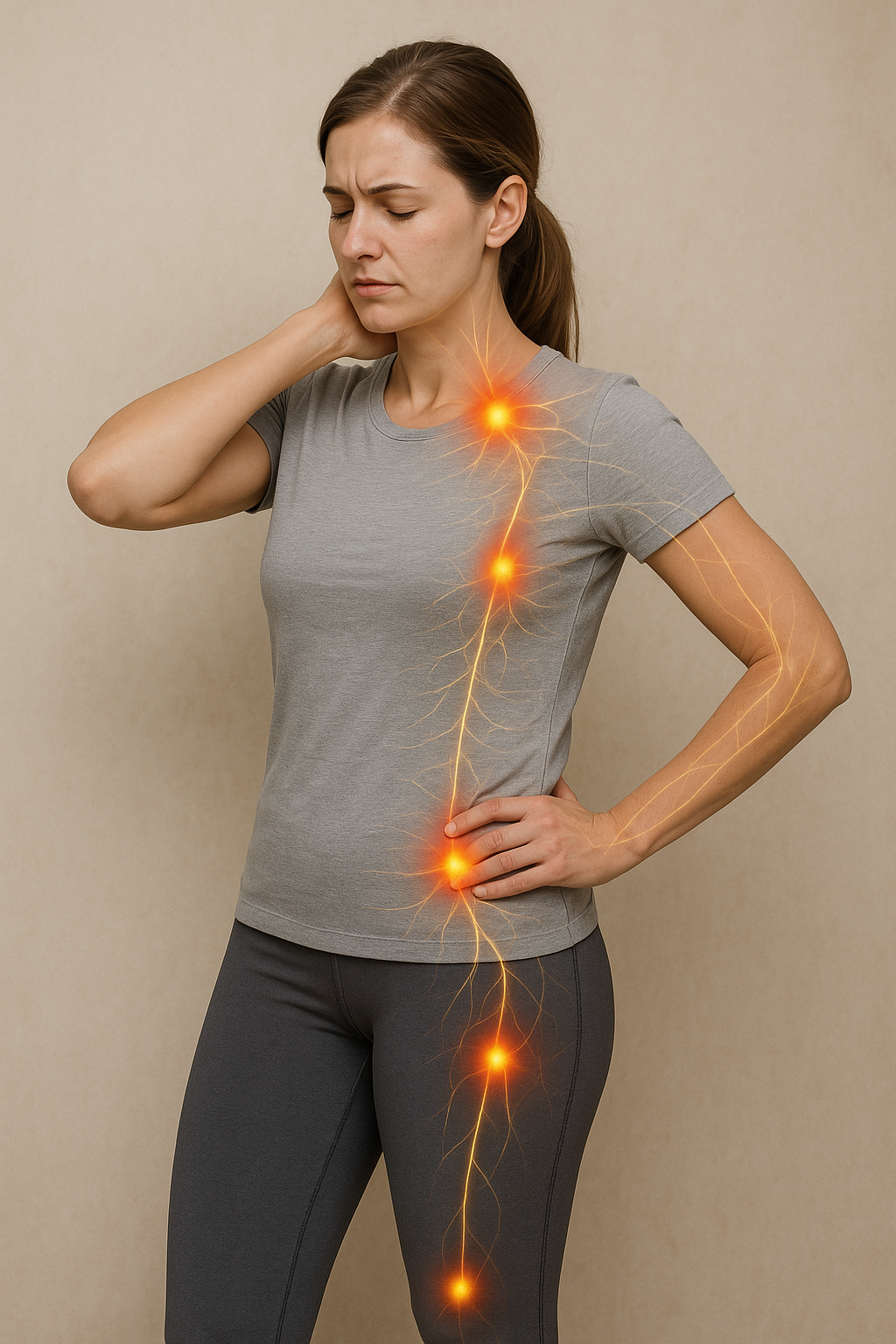
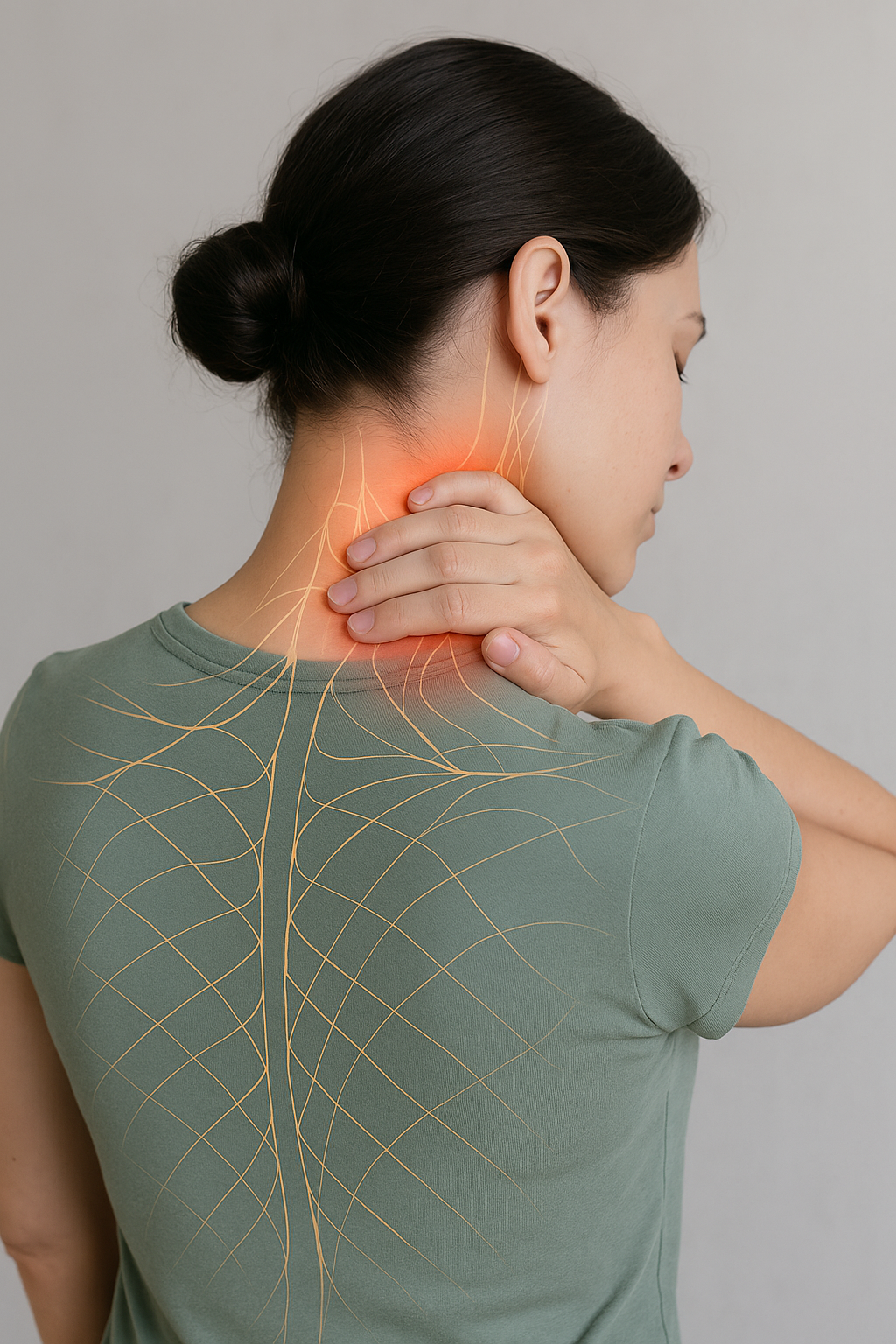
The nerves that supply sensation and strength to your arms originate in the cervical spine (neck). They pass through a dense network of muscles and connective tissue around the shoulder before traveling into the elbow and wrist.
When the muscles at the base of the neck — like the scalenes, trapezius, or levator scapulae — become tight, they can irritate these nerves. Clients often report “mysterious” symptoms such as tingling in the fingers, weakness when gripping, or pain that feels like it’s shooting down the arm.
Massage therapy helps by releasing those restrictions at the source. Freeing up the neck and shoulders can reduce nerve irritation, restoring healthy communication between the spine and the arms. It’s often surprising how quickly wrist and elbow symptoms calm once the upper pathways are opened.
🔗 Related: Neck Pain – Surprising Sources, Shoulder Pain – Surprising Sources
2. Pectoral Tightness (Desk Worker Syndrome)
Think about how much time we spend sitting at computers, scrolling on phones, or driving. These activities round the shoulders forward and shorten the chest muscles, especially the pectoralis minor.
When these muscles shorten, they tug the shoulders inward and compress the brachial plexus — the major bundle of nerves that passes under the collarbone and into the arms. The result? A nerve “bottleneck” that can trigger wrist and elbow pain even when the arms themselves are structurally healthy.
Massage therapy lengthens and softens these chest muscles, allowing the shoulders to open and giving the nerve bundle more space. Clients often describe this release as a sense of “breathing room” through their arms.
🔗 Related: Shoulder Pain – Surprising Sources, Desk Worker Survival Guide
3. Hand & Thenar Restrictions
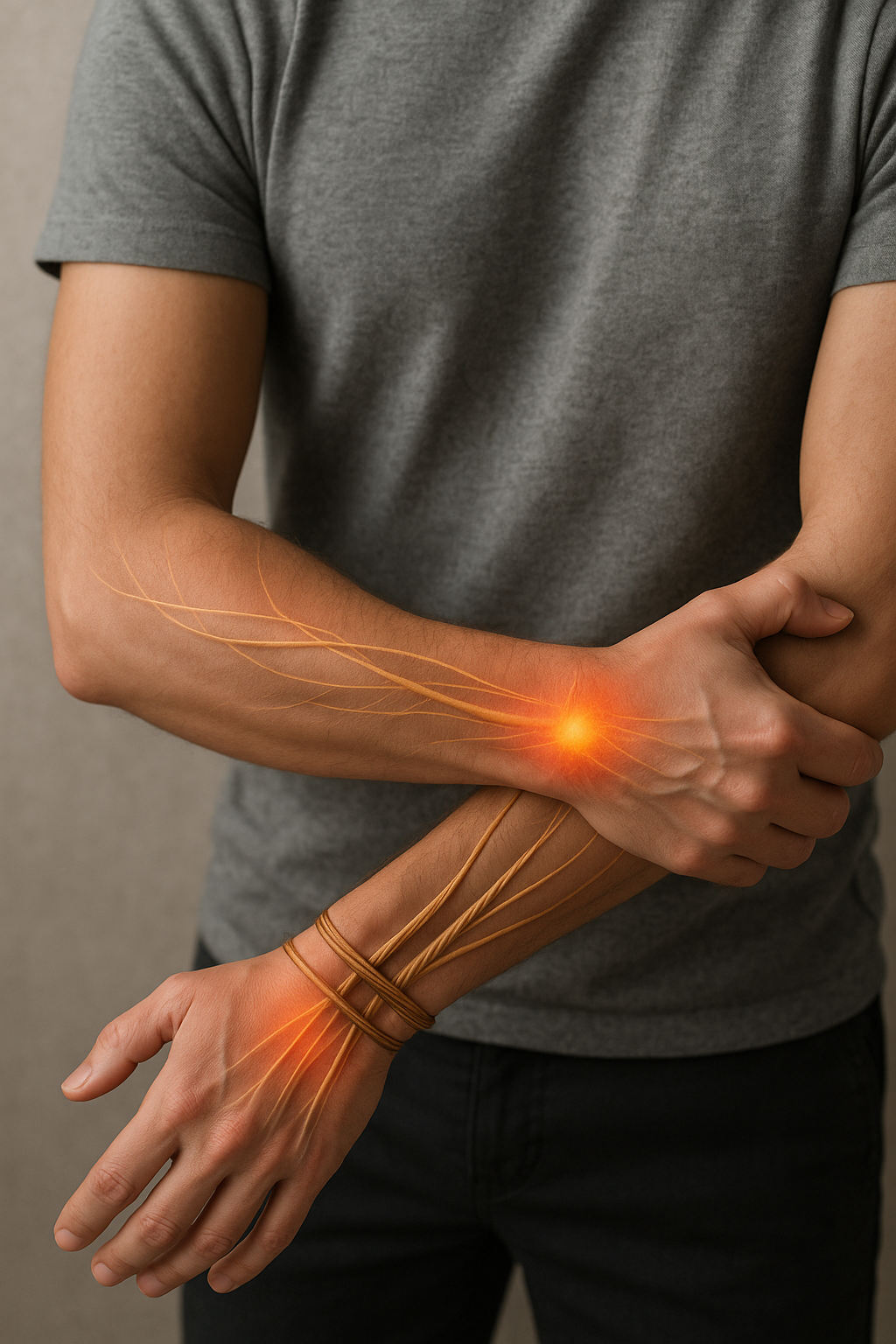
It’s easy to overlook how much our hands do. Typing, gripping steering wheels, scrolling phones, gaming, cooking — all these actions keep the small muscles of the hands (the thenar and hypothenar groups) constantly busy.
Over time, these muscles become tight and overworked. Because they connect to tendons that run up the forearm, hand restrictions can pull like puppet strings on the elbow and wrist. Clients may feel wrist stiffness, forearm fatigue, or pain at the inside of the elbow (commonly misattributed solely to “golfer’s elbow”).
By treating the hands directly, massage therapy restores mobility where it all begins. Once the hands are freed, the tension often melts away from the forearms and wrists. It’s one of those “small hinges swing big doors” moments.
🔗 Related: Posture & Device Use, Neck Pain – Surprising Sources
4. Scapular Imbalances
Your shoulder blade (scapula) is the basecamp for many muscles that travel down into the arms, including the triceps and forearm extensors. If the scapula is restricted, winging outward, or not gliding smoothly against the ribcage, the muscles around it have to work overtime.
This extra work shows up downstream. The elbow may start aching from overloaded triceps tendons, or the wrist may feel unstable because the stabilizing muscles are fatigued. Clients are often shocked to learn their arm pain improves when the massage focuses on their back instead of the arm itself.
Restoring scapular mobility through massage, stretching, and postural awareness takes the pressure off the elbow and wrist, allowing the whole arm chain to function more smoothly.
🔗 Related: Shoulder Pain – Surprising Sources, Hip Pain – Surprising Sources
5. Old Injuries & Scar Tissue
The body remembers. A wrist fracture from ten years ago, a sprained elbow from childhood sports, or even surgical scars in unrelated areas (like the abdomen or chest) can change how tissue glides and loads.
Scar tissue tends to be less flexible than healthy fascia, creating “snags” that pull on surrounding structures. Even if the injury seems unrelated, those fascial restrictions can travel along connective lines into the arm, forcing the elbow and wrist to absorb more strain.
Massage therapy and myofascial release techniques gently remodel scar tissue, restoring normal glide. Clients often notice greater freedom not just in the injured spot, but in distant areas like the forearm or wrist that were carrying the hidden burden.
🔗 Related: Scar Tissue & Massage Therapy, Foot Pain – Surprising Sources
6. Spinal Curves & Scoliosis
Scoliosis is often thought of as a back issue, but the curve of the spine affects the entire body. A rotated spine can tilt the ribcage and shift the shoulder girdle, creating uneven loading through the arms.
One arm may be forced to work harder, while the other compensates with awkward angles. This uneven distribution can show up as chronic wrist pain, tennis elbow, or forearm tightness that never seems to resolve.
Massage therapy helps by restoring balance where possible — freeing the hips and ribs, lengthening overworked muscles, and giving the arms more symmetry to work with. Even mild scoliosis can trigger a cascade of strain into the arms, but attentive treatment makes a noticeable difference.
🔗 Related: Scoliosis & Massage, Hip Pain – Surprising Sources
The Takeaway
Elbow and wrist pain aren’t always “just” from typing or overuse. Nerve pathways from the neck, tight chest muscles, scapular mechanics, hand restrictions, scar tissue, and even spinal curves can all feed stress into the arm. By addressing these hidden contributors, massage therapy provides relief that lasts longer than a brace, pill, or temporary fix.
If you’ve been struggling with stubborn arm pain, the solution may lie beyond the joint itself.
At-Home Tips for Happier Elbows & Wrists
Massage is powerful, but daily care reinforces progress. Here are simple ways to support pain-free arms at home:
- Neck Stretch Reset: Sit tall, gently tilt your ear toward one shoulder, and breathe. Hold 20–30 seconds per side. Relieves nerve tension that feeds into the arms.
- Chest Opener in a Doorway: Place your forearms on a doorway frame and lean forward. Opens shortened pecs from desk work and restores nerve space.
- Forearm Roll with a Ball: Place a tennis ball under your forearm on a table and roll slowly. Releases tight fascia along the wrist and elbow tendons.
- Hand Spread Drill: Press palms together, then spread your fingers wide as if making “sun rays.” Activates and relaxes the small hand muscles that affect the wrist.
- Scapular Squeeze: Sit or stand tall, squeeze shoulder blades together gently, and release. Improves scapular alignment and reduces strain traveling into the arms.
Book a session at Rise Massage Therapy in Winchester and discover how liberating the chain brings freedom to your wrists and elbows.