

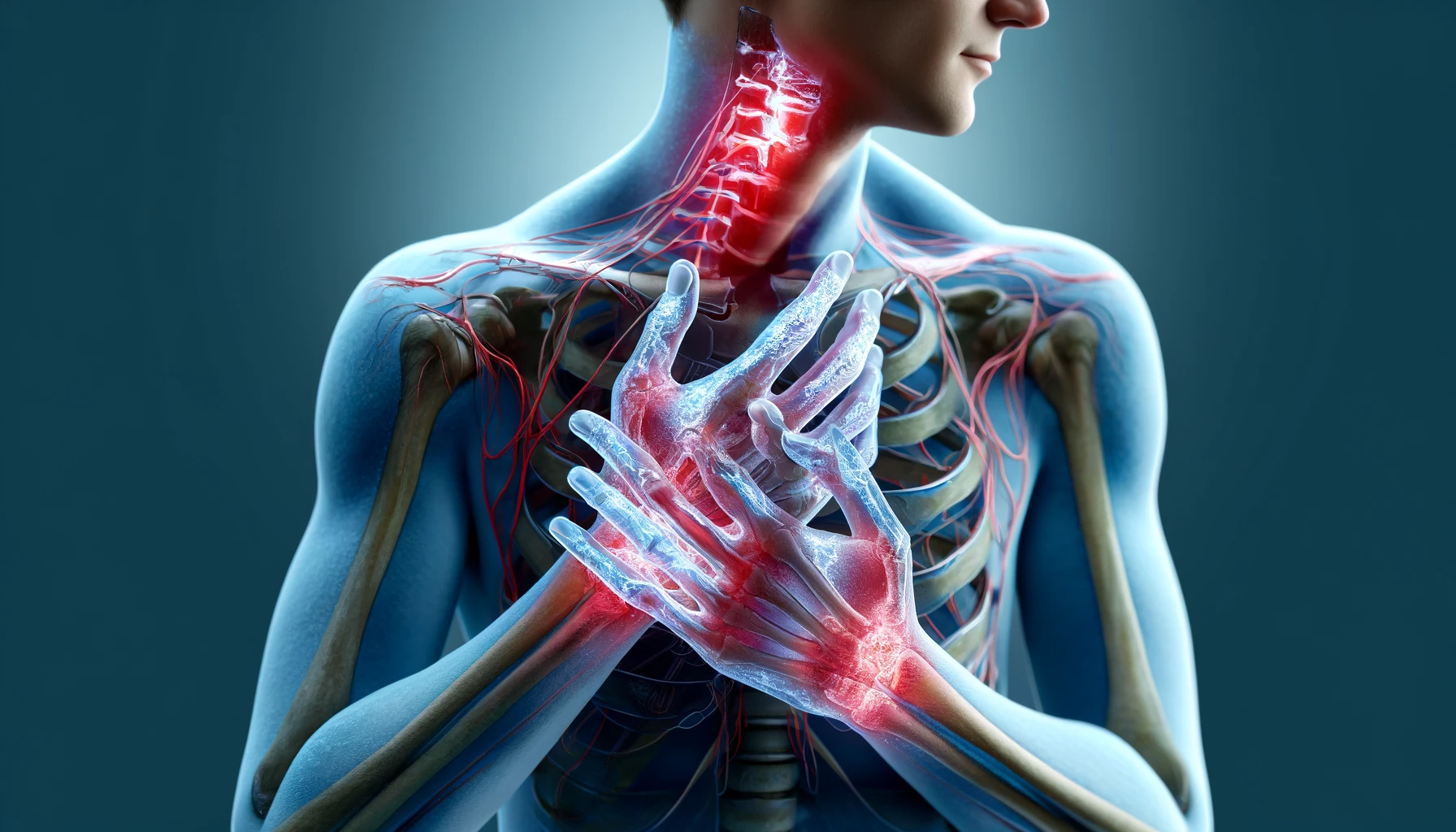
Tingling hands. Numb arms. Shoulder heaviness that seems to worsen with overhead activity. These are hallmark signs of Thoracic Outlet Syndrome (TOS) — a condition where nerves and blood vessels get compressed as they pass between the collarbone, ribs, and surrounding muscles.
Because symptoms often mimic carpal tunnel, rotator cuff injuries, or even cardiovascular problems, TOS is frequently misdiagnosed. At Rise Massage Therapy, we often see clients who’ve been searching for answers for months, only to discover that the source of their discomfort lies in the small but critical space known as the thoracic outlet.
Massage therapy can’t change bone structure, but by releasing fascial and muscular restrictions in the neck, chest, and shoulders, it can relieve the compression and restore freedom to nerves and circulation.

Understanding Thoracic Outlet Syndrome
The thoracic outlet is the narrow space between the collarbone and first rib. Through this passage run the brachial plexus (a bundle of nerves supplying the arm) and important blood vessels. When this outlet narrows due to tight muscles, poor posture, or injury, nerves and vessels become compressed.
Symptoms of TOS include:
- Tingling or numbness in the arm or hand
- Weak grip strength
- Pain in the neck, shoulder, or arm
- A heavy, tired feeling in the arm after activity
- Coldness, swelling, or discoloration in severe vascular cases
Contributing factors:
- Forward head and rounded shoulder posture
- Tight scalene or pectoralis minor muscles
- Repetitive overhead movements (sports, work tasks)
- Old collarbone or rib injuries
- Carrying heavy loads on one shoulder
Myths & Misconceptions
- “TOS is the same as carpal tunnel.”
While symptoms may overlap, carpal tunnel involves compression at the wrist, not the collarbone. - “It only affects athletes or manual laborers.”
Desk workers with rounded posture are equally at risk. - “It’s a vascular problem only.”
Neurological compression is far more common, though vascular TOS can occur in more severe cases. - “Massage can’t help nerve issues.”
While massage doesn’t “fix” nerves, it relieves the muscular and fascial tension compressing them — often a key to lasting relief.
Deeper Causes & System Connections
TOS rarely occurs in isolation. It often reflects broader system patterns:
- Scalene Muscle Tension: These small neck muscles attach to the first rib. When tight, they pull it upward, narrowing the thoracic outlet.
- Pectoralis Minor Tightness: This chest muscle runs from ribs to scapula; shortened posture drags it down onto nerves.
- Clavicular Restrictions: Old injuries or poor posture limit clavicle mobility, shrinking the outlet space.
- Shoulder Imbalance: Forward-rounded shoulders add constant compression.
- Postural Strain: Prolonged sitting or device use collapses the thoracic spine, crowding nerves and vessels.
- Fascial Lines: Restrictions in the jaw or diaphragm can ripple down, increasing bracing at the thoracic outlet.
Nerve Compression & Circulatory Blockage
The mechanics of TOS are rooted in two processes:
- Nerve Compression: The brachial plexus nerves pass through tight scalenes and under the clavicle. Chronic pressure irritates them, causing tingling, weakness, or pain down the arm.
- Circulatory Impingement: Blood vessels can also become compressed, leading to swelling, cold hands, or even color changes.
Massage therapy helps by:
- Lengthening scalenes and pec minor to free nerve pathways.
- Mobilizing fascia around the clavicle and first rib.
- Restoring thoracic spine extension for better alignment.
- Reducing guarding patterns that perpetuate compression.
What’s Happening Beneath the Surface — And How Massage Intervenes
TOS symptoms reflect both structural compression and nervous system sensitivity:
- Muscle Shortening: Tight scalenes and pec minor physically narrow the thoracic outlet.
- Fascial Adhesions: Stiffened fascia around the clavicle and rib cage limits natural glide, trapping nerves.
- Protective Guarding: Muscles brace to protect irritated nerves, worsening compression.
- Circulatory Blockage: Restricted vessels reduce oxygen supply, causing fatigue and swelling in the arm.
- Nerve Sensitization: Constant irritation makes nerves hypersensitive, so even mild compression feels painful.
Massage therapy interacts with each of these processes by:
- Softening adhesions and restoring fascial glide.
- Releasing scalene and pec minor tightness.
- Mobilizing the thoracic spine and ribcage to expand space.
- Calming protective guarding, reducing nerve irritation.
- Boosting circulation to oxygenate tissues and restore energy.
Lifestyle & Prevention
Managing TOS long-term requires daily attention to posture and movement:
- Ergonomic Setup: Keep screens at eye level and shoulders relaxed to reduce forward head posture.
- Load Awareness: Avoid carrying heavy bags on one shoulder, which drags the clavicle down.
- Movement Variety: Alternate between sitting, standing, and walking throughout the day.
- Strength Balance: Strengthen mid-back and shoulder stabilizers to counteract chest dominance.
- Breathing Patterns: Practice deep, diaphragmatic breathing to relax scalenes and reduce chest bracing.
- Overhead Moderation: Limit repetitive overhead activity or break it up with stretches.
At-Home Tips for Thoracic Outlet Relief
Practical drills clients can try between sessions:
- Scalene Stretch: Sit tall, tilt head to one side, and place the hand behind the back. Hold 20–30 seconds to lengthen scalenes.
- Doorway Pec Stretch: Place forearms against a doorway, lean gently forward. Opens pec minor and chest fascia.
- Shoulder Blade Squeeze: Draw shoulder blades back and down, hold for 5 seconds. Strengthens stabilizers that open the thoracic outlet.
- Foam Roller Extension: Lie with roller along the spine, arms out wide. Restores thoracic extension and opens chest.
- Breathing Reset: Place hands on lower ribs, inhale deeply to expand ribcage laterally. Relieves compression and resets posture.
When to Seek Professional Help
Massage therapy offers significant relief, but urgent medical evaluation is needed if:
- The arm suddenly swells or changes color
- Numbness or weakness progresses rapidly
- Symptoms persist despite conservative care
- There is severe vascular involvement (cold hands, loss of pulse)
In such cases, imaging or surgical evaluation may be necessary, often alongside massage and physiotherapy.
The Takeaway
Thoracic Outlet Syndrome is often hidden in plain sight — tingling, numbness, or heaviness in the arms may be misattributed to carpal tunnel or shoulder problems. But the real issue lies higher, in the narrow passage between collarbone and first rib.
By releasing scalene and chest tightness, mobilizing fascia, and restoring posture, massage therapy helps expand the thoracic outlet and free nerves and vessels from compression. Combined with daily posture awareness and simple self-care drills, it offers long-lasting relief and resilience.