
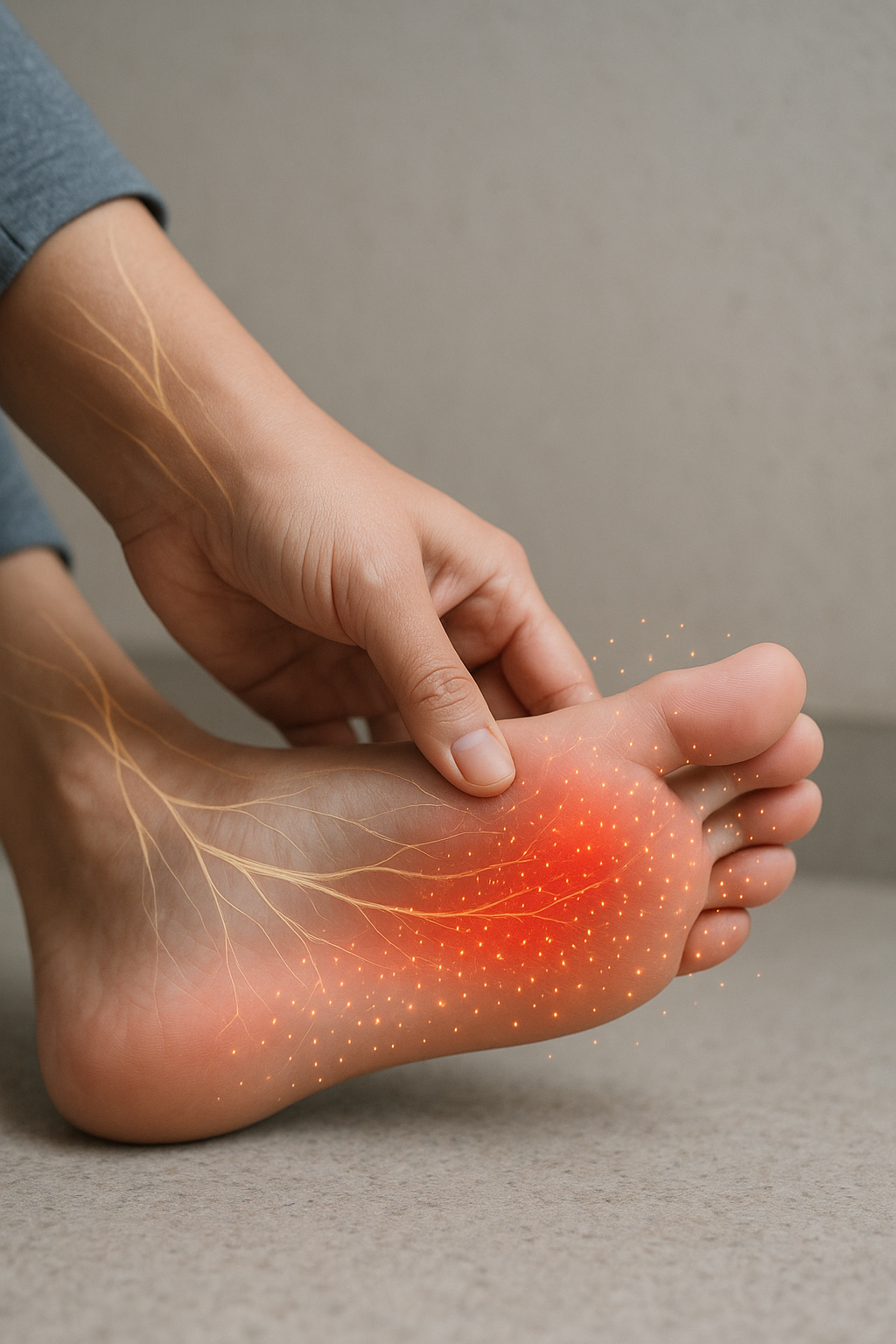
Foot pain is often blamed on the obvious culprits — plantar fasciitis, sprains, or overuse. But because the feet are our foundation, discomfort here is rarely just about the sole. Restrictions anywhere in the body can echo downward, showing up as pain in the arches, heels, or toes.
At Rise Massage Therapy, we often find that lasting relief for foot pain means looking above the ankle and working through the entire pain chain.
Here are some unexpected sources of foot pain — and how massage therapy helps.
1. Tight Calves (The Hidden Aggravator)
Your calf muscles connect directly into the Achilles tendon and plantar fascia. When they tighten — from running, cycling, hiking, or even prolonged sitting — they pull on the heel and arch, creating pain that feels like plantar fasciitis.
Many clients who come in for “foot pain” are surprised to find their calves rock-hard and tender. Releasing this tension can take immediate pressure off the heel and sole. In fact, loosening the calves often feels like unlocking the feet themselves.
Massage therapy works by lengthening and softening these muscles, restoring normal glide through the Achilles and fascia. For runners and athletes, this can be the missing link in resolving chronic heel pain.
🔗 Related: [Low Back Pain – Surprising Sources], [Knee Pain – Surprising Sources]
2. Hip Restrictions
Healthy walking depends on mobile hips. When the hips tighten, the body compensates by altering gait. Even small changes in stride length or rotation ripple downward, placing uneven pressure on the arches, toes, and heels.
Clients with restricted hips often notice pain in one foot more than the other, or calluses that form unevenly. This isn’t just a foot problem — it’s a hip problem showing up at the ground level.
Massage therapy restores mobility in the hip flexors, glutes, and deep rotators, creating smoother walking mechanics. As hip freedom returns, the feet no longer bear excess stress, and pain often fades without direct foot work.
🔗 Related: [Hip Pain – Surprising Sources], [Low Back Pain – Surprising Sources]
3. Low Back & Nerve Tension
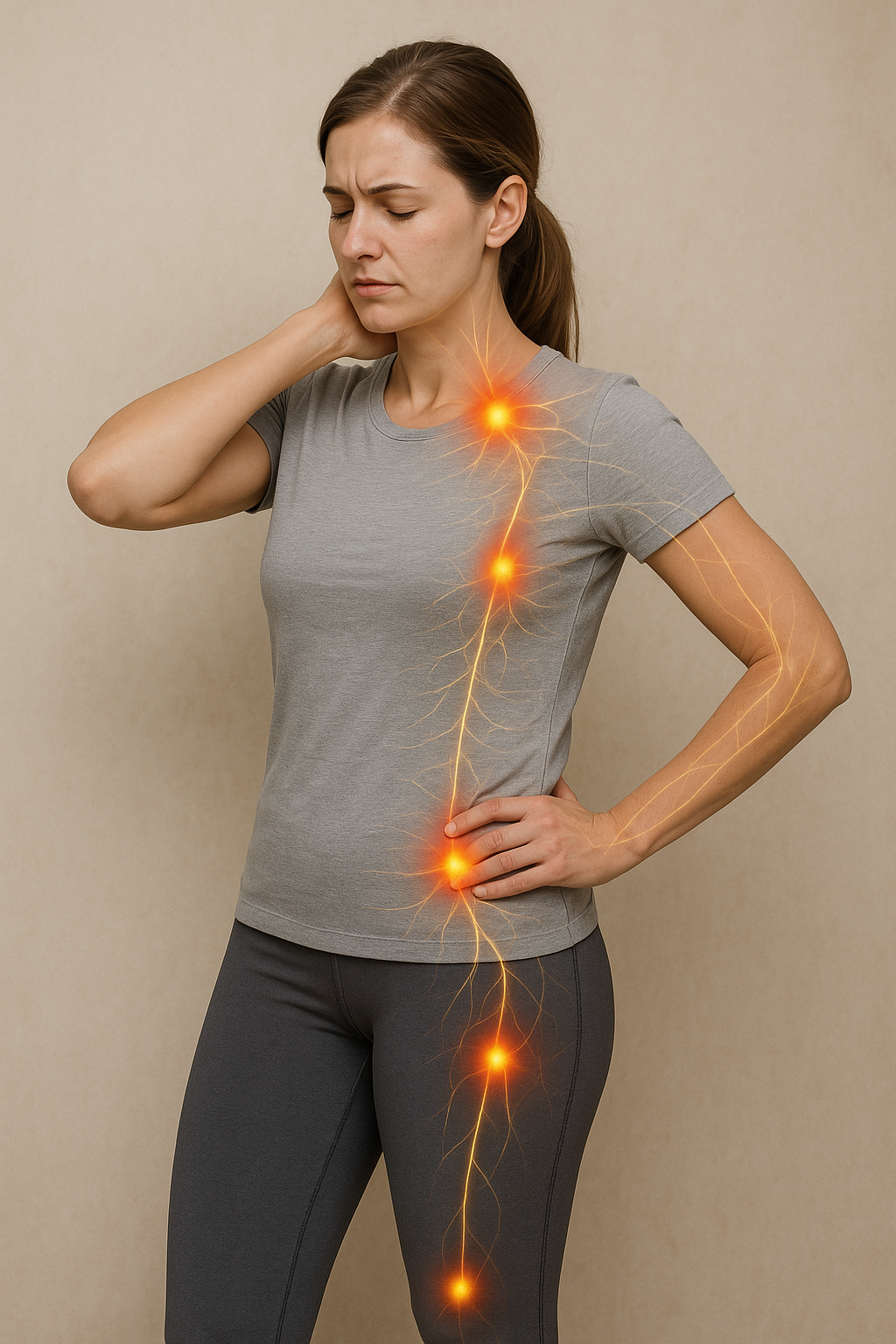
The sciatic nerve runs from the lumbar spine all the way to the foot. When this pathway is irritated — whether from disc pressure, piriformis tightness, or lumbar restrictions — the foot often feels the pain.
Clients describe this as burning, tingling, or stabbing pain in the heel, arch, or toes. It may mimic plantar fasciitis, but the source is actually higher up the chain.
Massage therapy focuses on freeing the low back, hips, and gluteal fascia to relieve nerve compression. By addressing the root cause, symptoms in the foot often resolve — even when the foot itself has been resistant to treatment.
🔗 Related: [Low Back Pain – Surprising Sources]
4. Fascia Chains Through the Leg
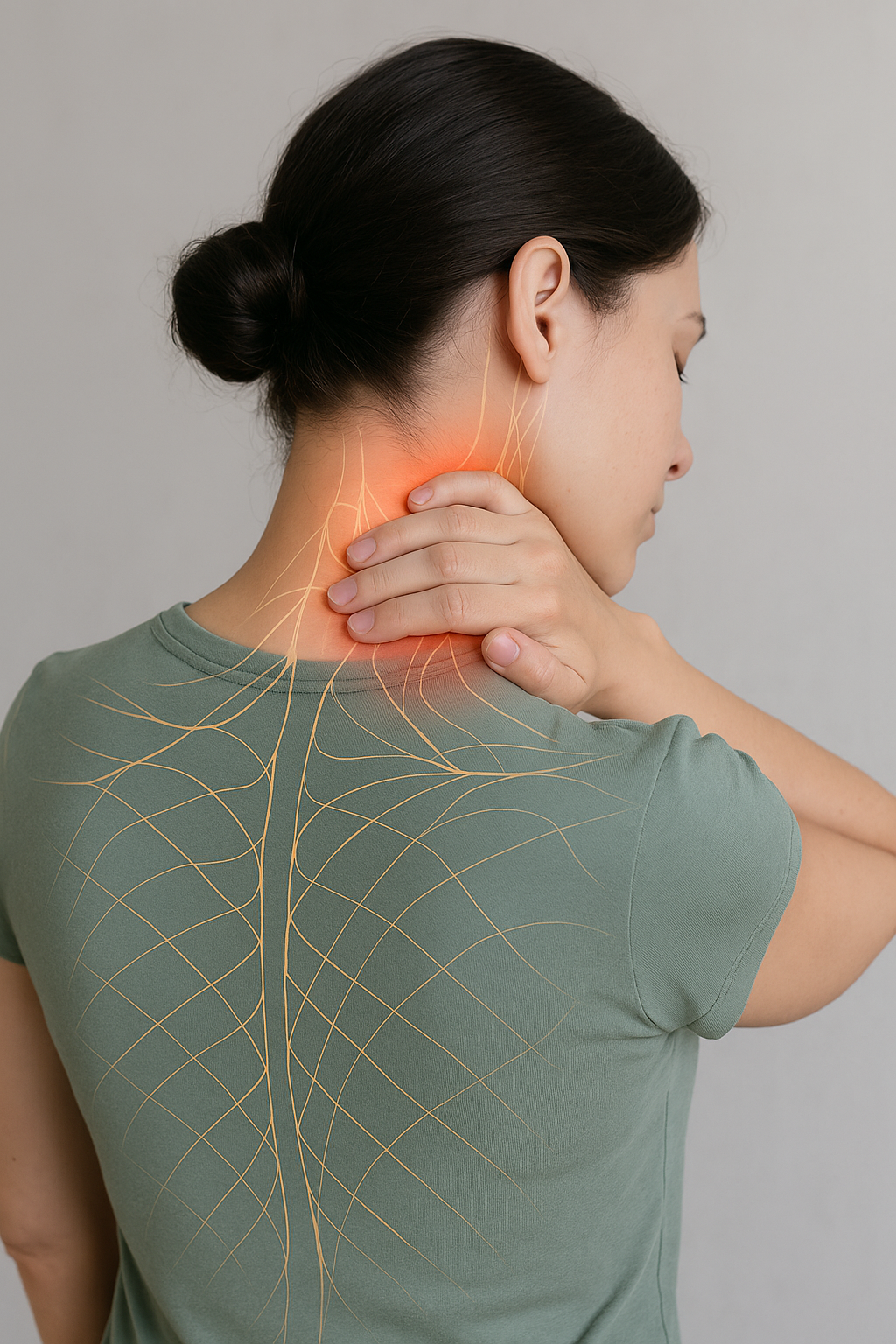
Fascia is a continuous web that runs from head to toe. Restrictions in one area often tug elsewhere, creating distant pain. For the foot, common culprits include the hamstrings, adductors, or inner thigh fascia.
When these tissues stiffen, tension transmits into the plantar fascia. Clients may feel chronic tightness under the arch or a “rope-like” pull along the bottom of the foot.
Massage therapy smooths out these fascial chains, restoring balance through the entire leg. Once the thigh and hamstrings are released, the plantar fascia relaxes naturally, reducing the need for aggressive foot-specific treatments.
🔗 Related: [Knee Pain – Surprising Sources], [Hip Pain – Surprising Sources]
5. Old Ankle or Knee Injuries
Past injuries often leave behind more than memories. Sprains, fractures, or surgeries can create scar tissue that alters how weight is distributed through the leg and foot.
A client who rolled their ankle years ago may unconsciously favor one side, loading the opposite foot. Or scar tissue from a knee surgery may restrict rotation, forcing the foot to absorb shock unevenly.
Massage therapy helps by softening adhesions, restoring joint mobility, and rebalancing the fascia around old injuries. This re-educates movement patterns so the feet can once again absorb force evenly — instead of carrying hidden compensations.
🔗 Related: [Scar Tissue & Massage Therapy]
6. Scoliosis & Spinal Imbalances
When the spine curves or rotates — even subtly — the effects travel all the way to the feet. Scoliosis shifts weight-bearing patterns so one foot may take more load, while the other compensates with altered arch mechanics. Over time, this uneven stress can lead to pain in the heel, arch, or forefoot.
Clients with scoliosis often notice that one shoe wears out faster than the other, or that they consistently get calluses on one side. The feet are simply reflecting the body’s larger imbalance.
Massage therapy helps by easing restrictions along the spine, hips, and pelvis. While massage won’t “cure” scoliosis, it restores mobility, reduces compensatory tension, and balances fascial pull through the legs. As alignment improves, the feet experience more equal support and less chronic strain.
At-Home Tips for Happier Feet
Massage is powerful, but daily care reinforces progress. Here are simple ways to support pain-free feet at home:
- Calf Stretch on a Wall: Step one foot back, press the heel down, and lean forward. Hold 20–30 seconds to release calf tension.
- Hip Opener: Sit on the edge of a chair, place one ankle over the opposite knee, and lean forward gently. Loosens the hip rotators that affect gait.
- Hamstring Reset: Place one foot on a chair, hinge forward at the hips, and stretch the hamstrings. Prevents fascial pull on the plantar fascia.
- Foot Massage Ball Roll: Place a small ball under the arch and slowly roll. Gently stimulates fascia and promotes circulation.
- Breathing Drill: Deep belly breathing reduces nervous system tension, which often heightens pain perception in the feet.
The Takeaway
From tight calves to spinal curvature, foot pain often reflects the body’s bigger story. Each restriction above the ankle contributes in its own way — which is why looking beyond the sole is key to lasting relief. Foot pain may feel local, but its roots often run much deeper. Because the feet are our foundation, restrictions in the calves, hips, back, fascia, and even old injuries can overload them until they finally give out.
By addressing these upstream contributors, massage therapy restores balance across the whole chain — creating relief not only for the feet, but for the entire body’s foundation.
👉 If your feet are giving you trouble, book a session at Rise Massage Therapy in Winchester and discover how much lighter you can feel when the whole chain is free.
.