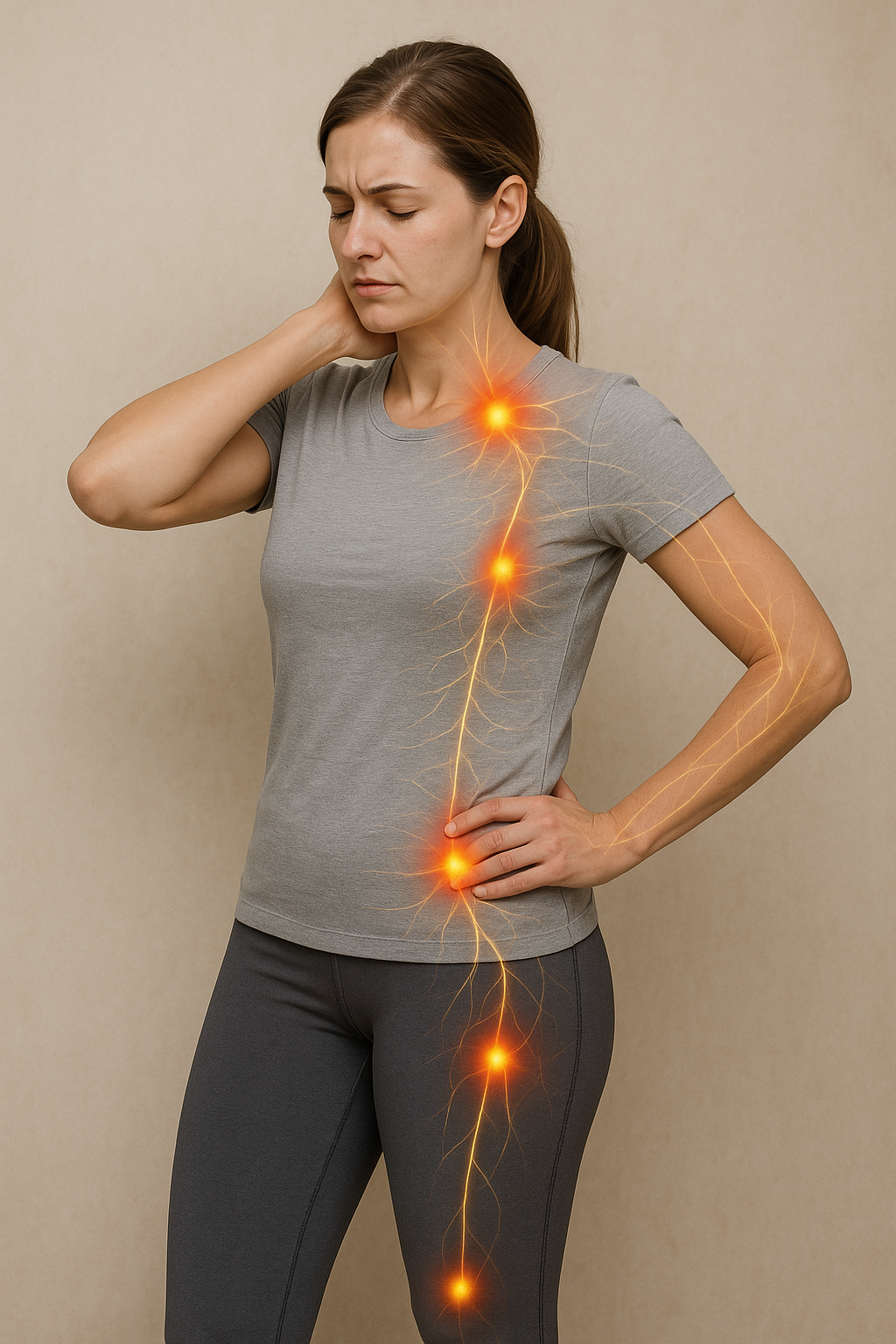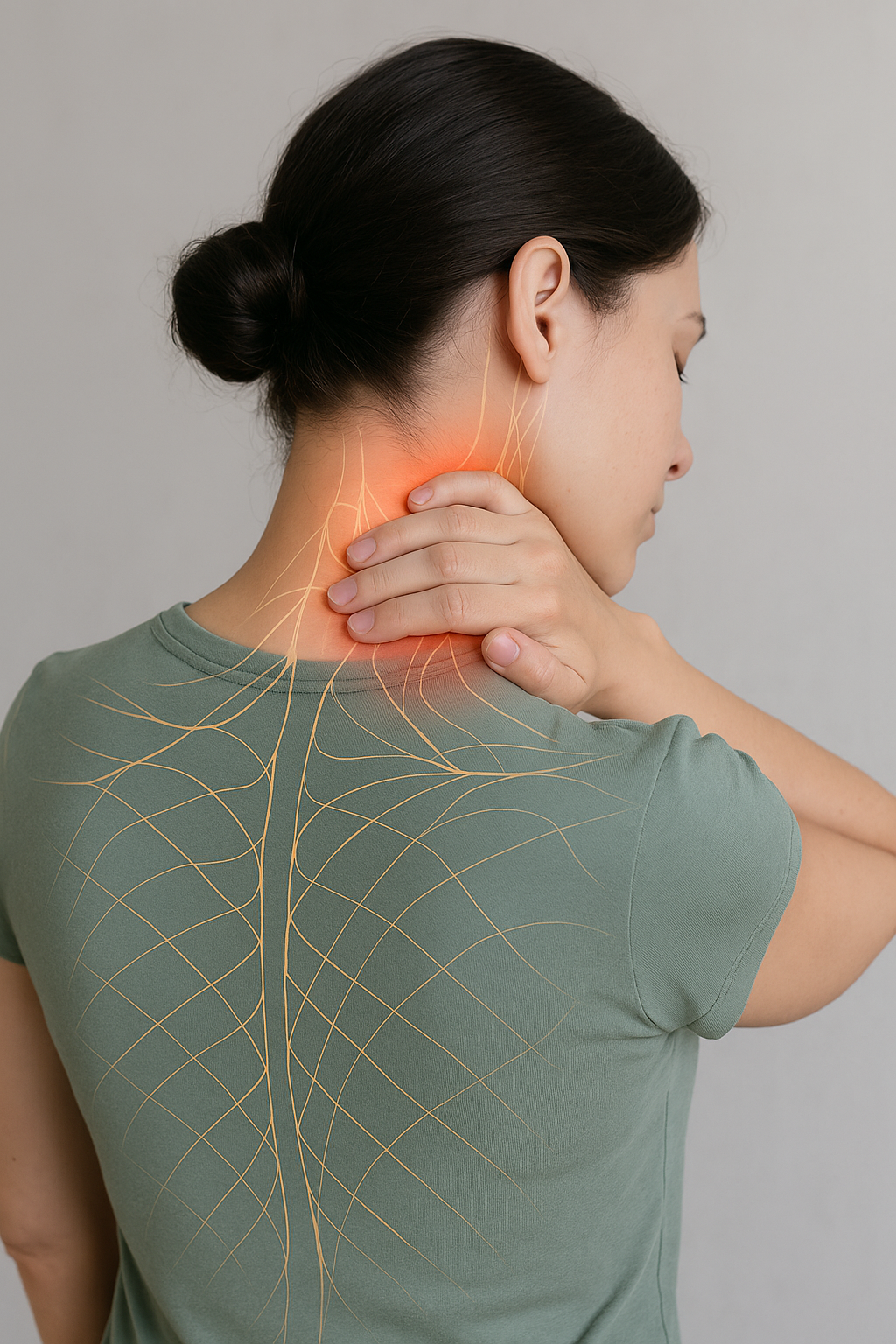

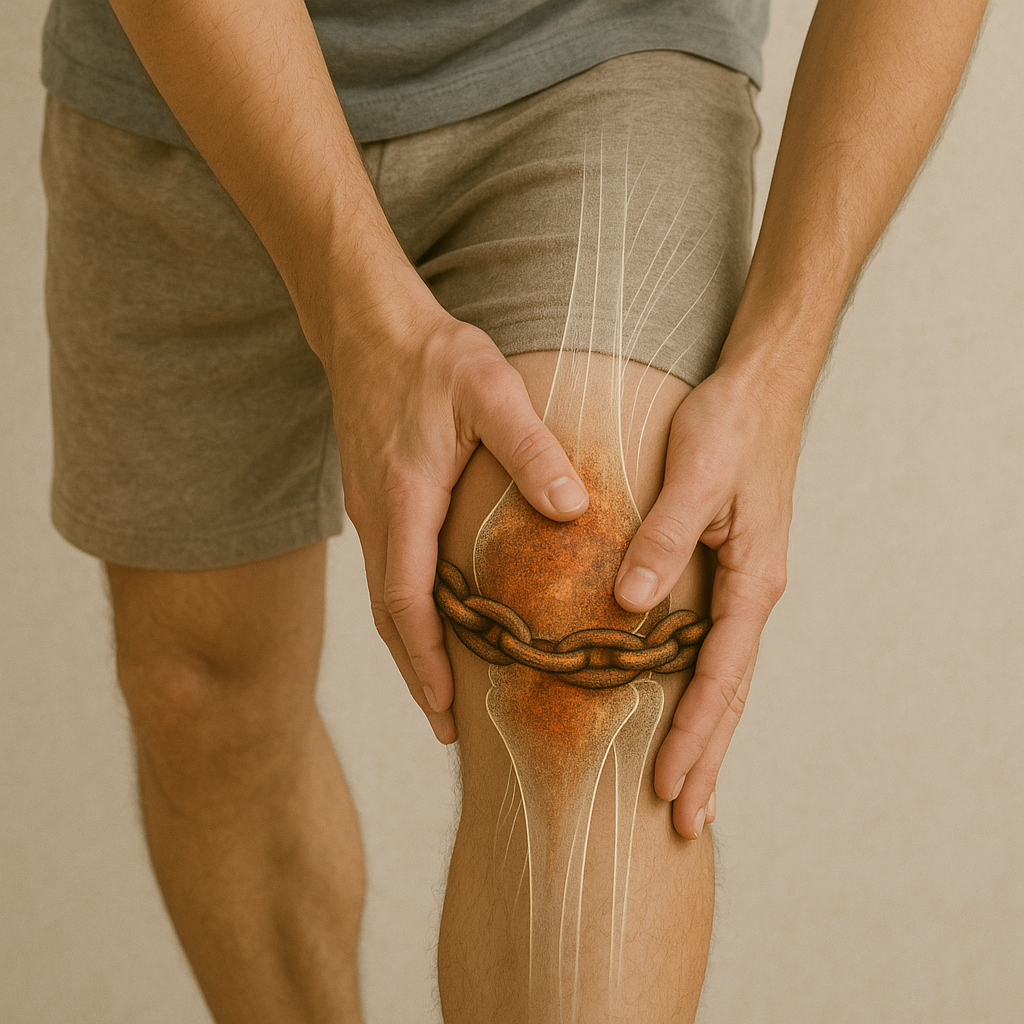
Knee pain is a popular complaint — and yet, in many cases, the knee itself isn’t the true culprit. The joint often becomes the victim of stress coming from above or below. Fascia, muscles, nerves, and joints all connect through long chains, meaning imbalance in one area often shows up as pain somewhere else.
At Rise Massage Therapy, we specialize in tracing pain back through these hidden pathways. When the “why” behind the pain is revealed, real healing becomes possible.
Here are some of the most surprising sources of knee pain — and how massage therapy helps.
1. Tight Calves & Ankles
The calves act as the shock absorbers of the lower body. When they’re supple, the ankle moves freely, dispersing force as you walk or run. But when the gastrocnemius and soleus are tight — from running, cycling, or long hours sitting — the ankle stiffens.
That stiffness means every step sends more impact up into the knee joint. Over time, this creates irritation, inflammation, and pain that feels like it comes “from the knee” when in fact it’s being driven by the calves.
Massage therapy softens the calves, restores fascial glide, and reawakens the ankle’s natural spring. Clients are often surprised at how quickly knee pressure reduces once the lower leg is freed up.
🔗 Related: Foot Pain – Surprising Sources, Low Back Pain – Surprising Sources
2. Hip Restrictions
The hip is the steering wheel of the leg. If hip mobility is limited — whether from sitting too long, sports imbalances, or old injuries — the femur (thigh bone) doesn’t track properly into the knee.
This misalignment can create:
- Uneven pressure across the knee joint
- Patellar tracking problems (kneecap pulling off-center)
- Pain with everyday activities like climbing stairs or getting up from a chair
Massage therapy restores mobility in the glutes, hip rotators, and deep psoas fascia, reducing the compensations that stress the knees. Clients often notice their gait feels lighter and smoother almost immediately.
🔗 Related: Hip Pain – Surprising Sources, Low Back Pain – Surprising Sources
3. Quadriceps & IT Band Tension
The quadriceps and IT band connect directly into the kneecap and outer knee. When these tissues shorten — often from running, cycling, or repetitive training — they pull on the patella and surrounding fascia, creating that familiar ache at the front or outside of the knee.
Massage therapy targets the deep fascial adhesions in the quads and IT band, reducing strain and restoring fluid movement. This is especially valuable for athletes, runners, and anyone dealing with “runner’s knee” or lateral knee tightness.
🔗 Related: Shoulder Pain – Surprising Sources (how tension bands affect distant joints)
4. Old Surgeries & Scar Tissue
Knees often carry the legacy of past injuries or operations. Meniscus repairs, ACL reconstructions, and even surgeries far from the knee — such as abdominal procedures — can leave fascial adhesions that tug through the kinetic chain.
These scars may not hurt directly, but they can subtly alter mechanics, forcing the knee to bear abnormal loads. Massage and myofascial release help soften scar tissue, restore glide, and reduce the secondary pain that lingers long after recovery.
🔗 Related: Scar Tissue & Massage Therapy
5. Postural Habits
Sometimes, it’s not a dramatic injury but small, daily habits that build knee pain. Examples include:
- Locking the knees while standing
- Sitting with legs crossed for hours
- Collapsing the arches when walking
Over time, these patterns overload the knee joint. Massage therapy not only releases the restrictions caused by these habits but also increases body awareness, helping clients move more naturally and prevent recurrence.
6. Knee Pain & Scoliosis
Scoliosis doesn’t just affect the spine — it ripples downward. A spinal curve often creates pelvic tilt or rotation, which in turn loads the knees unevenly. One knee may collapse inward while the other rotates outward, straining ligaments and fascia.
Even mild scoliosis can set off this chain reaction. Massage therapy restores mobility through the hips, IT band, and calves, reducing the torque scoliosis places on the knees. Many clients notice their gait feels smoother, lighter, and more balanced after treatment.
At-Home Tips for Happier Knees
Massage is powerful, but daily care reinforces progress. Here are simple ways to support pain-free knees at home:
Calf Stretch on a Wall: Step one foot back, press the heel down, and lean forward. Hold 20–30 seconds per side. Releases calf tension that tugs on the knee.
Quad & Hip Flexor Stretch: Standing, hold your ankle behind you and gently push the hip forward. Keep knees close together. Loosens quad pull on the kneecap.
Glute Bridge Activation: Lie on your back with knees bent, feet flat. Press through heels to lift hips, hold briefly, then lower. Strengthens glutes to take load off knees.
Hamstring Roll-Out: Sit on a firm chair with a ball under your hamstring. Slowly roll to release tight spots. Reduces fascial pull into the back of the knee.
Mindful Walking Drill: As you walk, soften your knees and spread weight evenly across your feet. Builds awareness and prevents overload patterns.
The Takeaway
Knee pain isn’t always a “knee problem.” Because the joint is at the crossroads of the body, it’s influenced by calves, hips, quads, fascia, posture, and even spinal curvature. By treating the whole pain chain, massage therapy brings relief that lasts longer than surface fixes.
If your knees are aching, the solution may not be inside the joint — but in the structures above and below it.
Book a session at Rise Massage Therapy in Winchester and discover freer knees today!