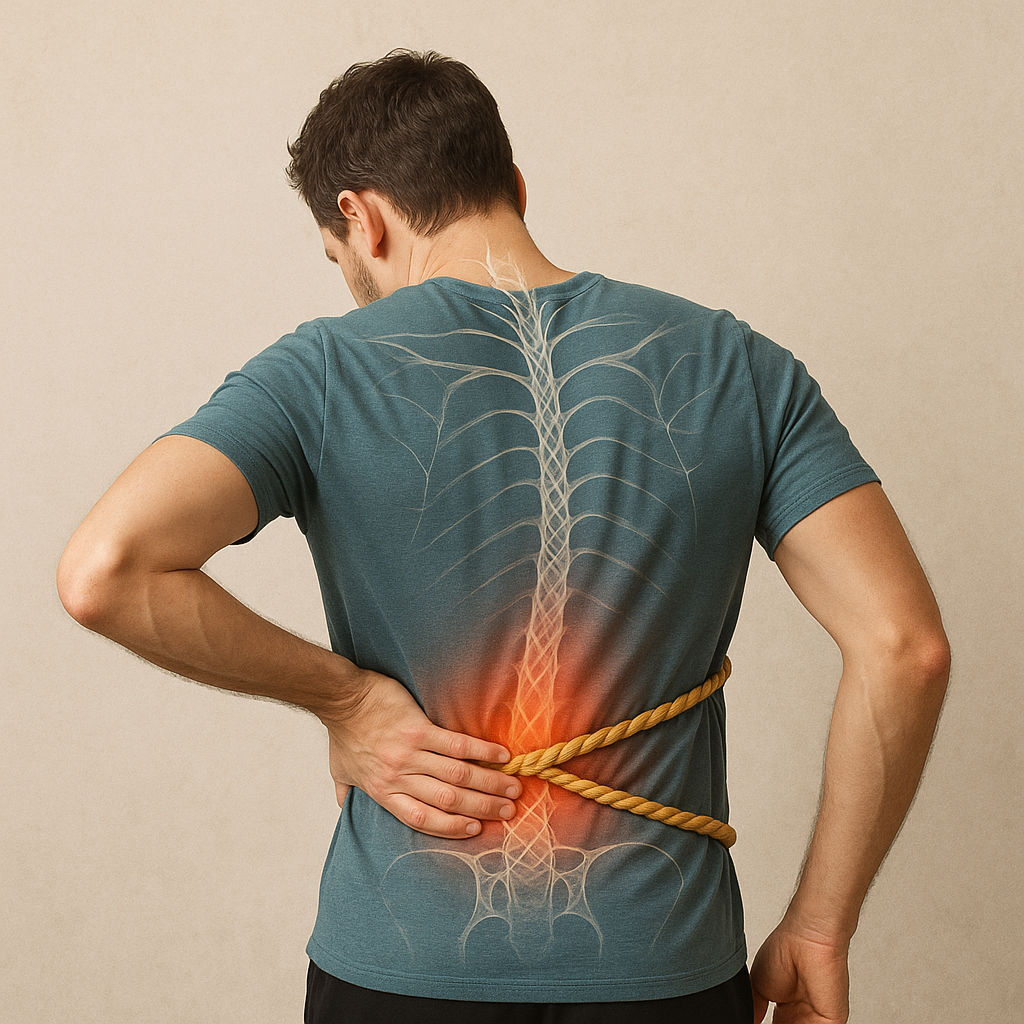


Hours at a desk, hunched over a laptop or phone, can leave the body stiff, sore, and drained. For many clients, postural strain is one of the most persistent sources of discomfort — often showing up as neck pain, shoulder tension, headaches, low back aches, or even wrist problems.
What makes postural strain so insidious is that it doesn’t happen all at once. Instead, micro-adjustments accumulate over months or years until the body is locked into guarded patterns. Massage therapy offers a way to interrupt this cycle, restoring balance to overworked muscles and restricted fascia, while also teaching the body what “ease” feels like again.

Understanding Postural Strain
Postural strain refers to the stress placed on muscles, fascia, and joints when the body holds a prolonged position — most often sitting with rounded shoulders and a forward head posture.
Common symptoms include:
- Neck and shoulder tightness
- Tension headaches
- Mid- and low-back pain
- Wrist or elbow discomfort from typing/mousing
- Fatigue and reduced focus
Contributing factors:
- Poor desk ergonomics (screen too low, chair too high, keyboard too far)
- Prolonged sitting without breaks
- Device use (“text neck”)
- Stress-driven muscle bracing
- Weak core and glute muscles that allow collapse into slouched posture
Myths & Misconceptions
- “Good posture just means sitting up straight.”
True postural health is dynamic — shifting positions frequently, not holding one rigid pose. - “Pain means I need a new chair.”
Chairs matter, but tension often reflects fascial stiffness and poor movement habits more than equipment alone. - “Exercise fixes bad posture automatically.”
Exercise helps, but without releasing fascial restrictions, muscles remain locked into old holding patterns. - “I just need to stretch more.”
Stretching alone won’t undo chronic fascial adhesions or nervous system bracing that keep posture stuck.
Deeper Causes & System Connections
Postural strain isn’t just about slouching — it reflects deeper chain reactions:
- Forward Head Posture: Every inch forward adds up to 10 extra pounds of force on the neck and shoulders.
- Chest Tightness: Shortened pectorals pull shoulders forward, compressing the thoracic outlet and straining the upper back.
- Neck & Jaw Tension: Chronic computer use increases scalene and SCM tension, often contributing to TMJ dysfunction.
- Low Back & Hip Imbalance: Prolonged sitting shortens hip flexors, tilts the pelvis, and increases lumbar strain.
- Fascial Stiffening: Hours without movement dehydrate fascia, locking the body into guarded patterns.
This is why massage therapy often treats not just the back, but the chest, neck, arms, and hips to restore postural balance.
Fascia, Breathing, and Nervous System Strain (Physiology Expansion)
Postural strain affects more than muscles — it reshapes breathing and nervous system tone:
- Restricted Fascia: Collagen stiffens around the chest and shoulders, making upright posture feel effortful.
- Breathing Shift: Slouched posture compresses the diaphragm, leading to shallow chest breathing.
- Nervous System Hyperdrive: Shallow breathing tells the brain we’re under stress, keeping the sympathetic nervous system (fight/flight) overactive.
- Feedback Loop: Stress fuels poor posture, which fuels more stress.
Massage therapy breaks this loop by rehydrating fascia, opening the chest, and restoring diaphragmatic breathing, giving the nervous system a reset.
What’s Happening Beneath the Surface — And How Massage Intervenes
Postural strain isn’t just a matter of “bad habits.” It reflects multiple physiological processes that reinforce one another:
- Muscle Imbalances: Some muscles (pecs, upper traps, hip flexors) become short and overactive, while others (mid-back stabilizers, glutes) weaken and lengthen.
- Fascial Adhesions: The body lays down collagen to “support” the slouched posture, making it harder to change over time.
- Circulatory Stagnation: Reduced movement slows blood and lymph flow, leaving tissues stiff and undernourished.
- Nerve Irritation: Rounded shoulders and forward head compress nerve pathways in the neck and thoracic outlet, creating tingling or fatigue in arms and hands.
- Stress Overlay: Mental load fuels unconscious bracing, compounding physical strain.
Massage therapy interrupts this cycle by:
- Softening adhesions in the chest, neck, and shoulders.
- Restoring glide in fascia that holds the spine and ribcage.
- Calming overactive muscles while stimulating underused stabilizers.
- Improving blood and lymph flow to oxygenate tissues.
- Downregulating stress signals so posture can reset naturally.
Lifestyle & Prevention
Massage lays the foundation, but prevention requires conscious daily choices:
- Ergonomic Setup: Keep screens at eye level, feet flat on the floor, and elbows at 90°.
- Movement Variety: Switch positions every 30–45 minutes. Standing desks or even pacing during calls help.
- Breath Awareness: Take periodic “breath breaks” — three deep belly breaths expand the ribcage and reset the nervous system.
- Strength Balance: Strengthen glutes and core while stretching chest and hip flexors to counteract sitting.
- Micro-Stretches: Simple shoulder rolls or chin tucks at your desk prevent hours of static tension.
- Device Awareness: Hold phones at eye level to reduce “text neck.”
At-Home Tips for Better Posture
Here are practical drills to support what massage therapy begins:
- Chin Tuck Drill: Sit tall, gently tuck chin straight back (not down). Strengthens deep neck flexors and reduces forward head posture.
- Pec Stretch on Doorframe: Place arms at 90° on either side of a doorway, lean forward gently. Opens the chest and counters rounded shoulders.
- Thoracic Extension on Foam Roller: Place roller across upper back, extend over it with arms overhead. Restores mobility in the mid-back.
- Hip Flexor Stretch: Kneel on one knee, gently press hips forward. Lengthens hip flexors that shorten from sitting.
- Desk Break Flow: Every hour, roll shoulders, open chest, and take three diaphragmatic breaths.
- Breath Reset: Place hand on belly, inhale so it rises, exhale slowly. Calms nervous system and restores upright posture naturally.
When to Seek Professional Help
Massage and self-care go a long way, but professional support is warranted if:
- Pain persists beyond several weeks despite ergonomic changes
- Numbness or tingling develops in arms or hands
- Headaches or migraines become frequent
- Low back pain interferes with sleep or daily function
- Postural strain leads to recurring injuries or fatigue
In these cases, a combination of massage therapy, physiotherapy, and medical assessment may be appropriate.
The Takeaway
Postural strain is one of the most common but least acknowledged health issues of modern life. Hours of sitting, slouching, and bracing quietly remodel the body — shortening fascia, tightening muscles, and reshaping breathing patterns. Over time, this creates pain that feels stubborn and “built in.”
Massage therapy addresses these hidden drivers by softening adhesions, restoring circulation, and calming the nervous system. Paired with simple daily habits, massage helps clients not only relieve pain but also reclaim a posture that feels strong, open, and effortless.👉 Feeling the toll of desk work? Book your session at Rise Massage Therapy in Winchester and experience how fascia-focused massage can unlock your posture and restore balance from head to toe.